

May 6, 2026 · 2000s · adidas-nba · american-apparel · authentication · dvd · era-00s · gamecube · grading · hip-hop-merch · journal · mitchell-and-ness · ps2 · reebok-nfl · retro-video-games · retrospective · vhs · vintage-jerseys · vintage-tees · xbox · y2k
The 2000s, And The Decade That Stopped Being Modern

The 2000s, And The Decade That Stopped Being Modern
The 2000s is the decade we argue about most on the grading bench. Some pieces from 2000 to 2009 read as vintage on sight: a tagless American Apparel tee that survived ten years of clubwear, a sealed PlayStation 2 launch title, a Reebok-era NFL jersey from the brand's first season holding the on-field license. Other pieces from the same window read as recent inventory that simply got older. The decade does not have a single sharp tell the way the 1990s and 1980s do. Production methods modernized in a tighter band, the manufacturing tags shifted from sewn to printed, the platforms went optical, and the cultural cycle started to compress. What "vintage" means inside the 2000s is a moving target, and we say so on the PDP rather than pretending the line is sharper than it is.
This is what the decade looks like from the bench, honest about where it is firm and where it is fuzzy.
Tees of the 2000s
The 2000s is the decade where the U.S.-cut single-stitch heavyweight blank gave way to the offshore-cut twin-stitch mid-weight blank. By 2002 most of the major blank makers had moved their production to Honduras, Mexico, El Salvador, and Haiti. Hanes, Fruit of the Loom, Anvil, Lee Sport, Jerzees all made the offshore shift in a tight window around 1999 to 2002. A "MADE IN U.S.A." Hanes Beefy-T from this band is a tail-end production run, and a "MADE IN HONDURAS" Hanes from 2003 forward is the new standard. Twin-needle hem and sleeve cuff is near-universal across the decade. Single-stitch tees from 2000 to 2003 exist but they are the exception, and we date them by tag layout rather than stitch.
A few specific calendar markers we lean on for the decade.
- Hanes Beefy-T transition. The gray-and-red Beefy-T tag carried into the early 2000s but lost the underlined "Hanes" word mark and shifted to a printed-on neck label format starting around 2005. By 2008 Hanes had moved most of its retail blanks to fully tagless construction. A sewn Beefy-T tag with a Honduras manufacturer mark is reliably 2000 to 2005. A printed neck label on a Hanes blank is reliably 2005 forward.
- Fruit of the Loom. The fruit-cluster icon redrawn in the mid-1990s carried through the 2000s on offshore blanks. The shift from sewn label to printed neck label happened around 2007 to 2008 across the FOTL retail line. A Honduras or Haiti FOTL tag with the redrawn cluster reads early-to-mid 2000s reliably.
- American Apparel. The brand's rise was a 2000s phenomenon. American Apparel cut tees in Los Angeles through the decade and held a meaningful share of the mid-decade premium-tee market. The original "Made in Downtown LA, Sweatshop Free" neck-print is a 2003 to 2008 marker. The brand's bankruptcy and acquisition events that scrambled the production trail came later. An American Apparel tee with the LA neck-print and a 50/50 fabric weight reads mid-2000s reliably.
- Lee Sport sunset. Lee Sport stopped being a licensed apparel name in the early 2000s. A Lee Sport tag on a 2000s licensed tee is an early-2000s ceiling, almost always 2000 to 2003.
- Tagless transition late-decade. The shift from sewn tags to printed-on neck labels swept across most major blank makers between 2005 and 2009. A fully tagless tee from the 2000s reads late-decade. A sewn-tag tee from the 2000s reads early-to-mid decade.
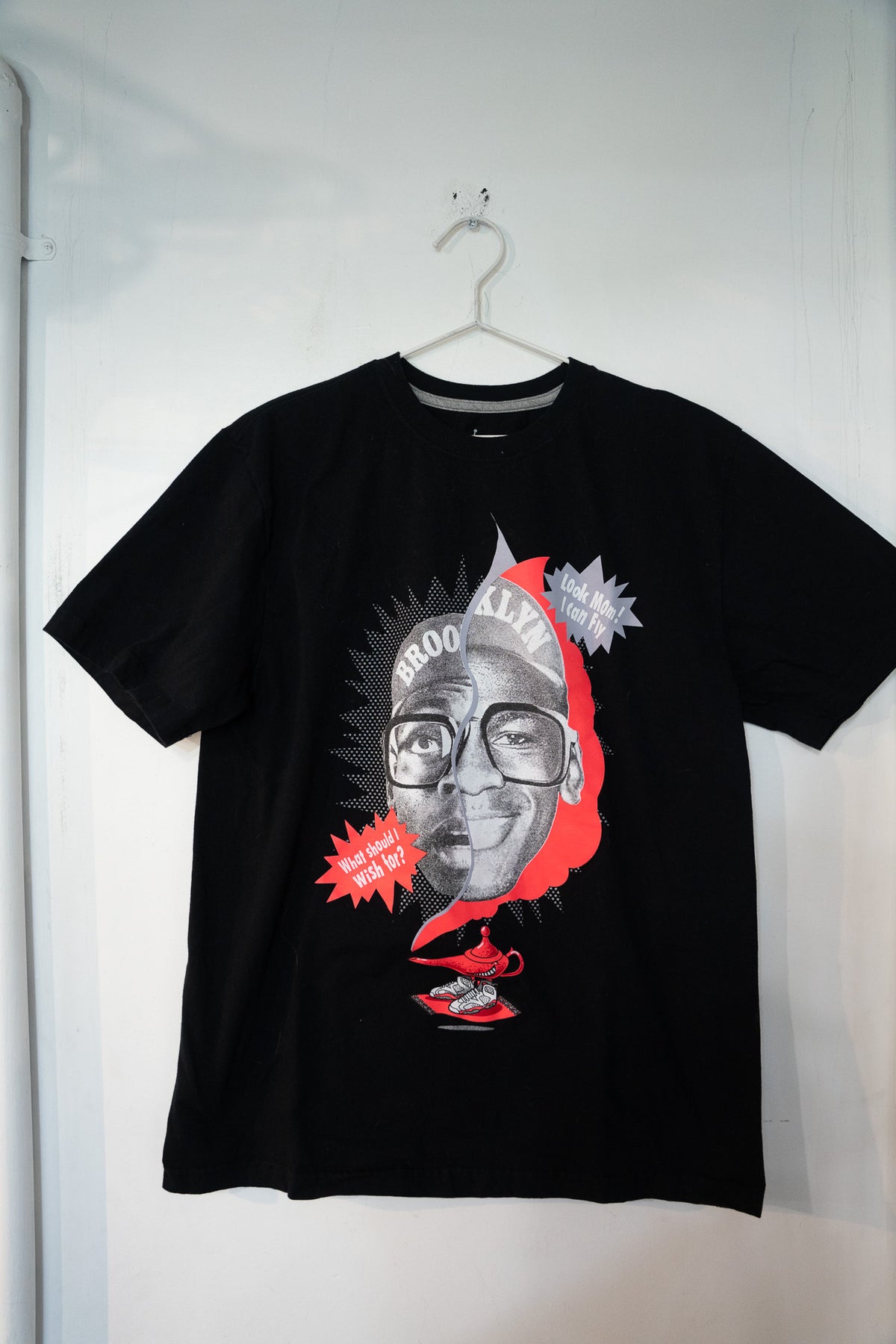
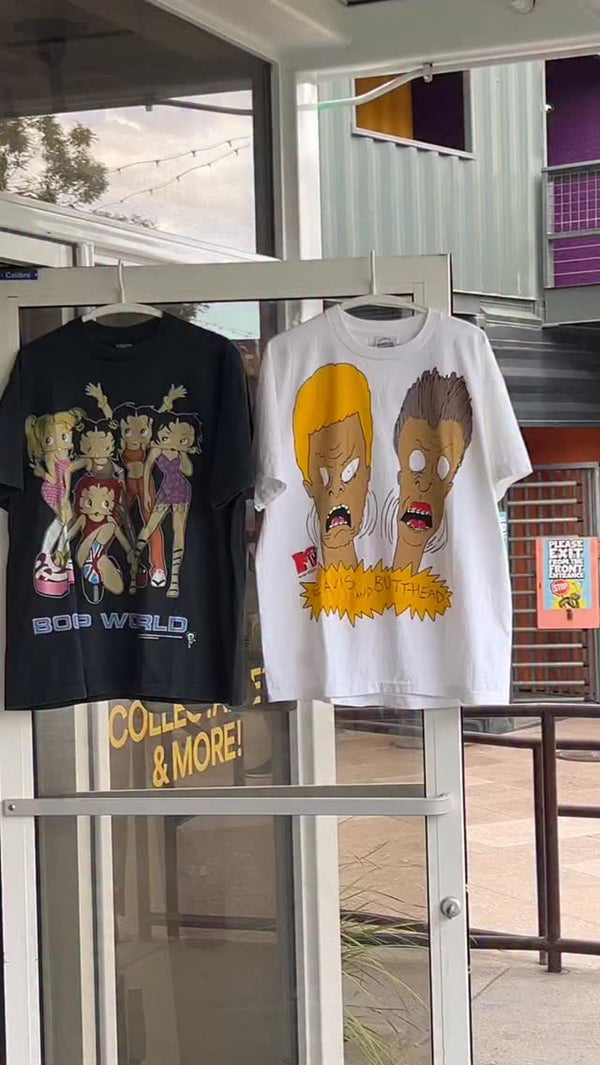
- Hip-hop and streetwear merch. The graphic-tee revival around hip-hop labels (Roc-A-Fella, Cash Money, G-Unit, Shady Records, Disturbing Tha Peace, Bad Boy), skate brands (Zoo York, DC Shoes, Element, Volcom, Stussy, Supreme's pre-hype era), and the rise of artist-direct merch all generated authentic-period 2000s tees that survived in volume and now read as the decade's most collectible tee category.
Print technology in the 2000s shifted toward water-based and discharge inks on the soft-blank tier and stayed plastisol on the heavyweight tier. A mid-2000s American Apparel tee with a soft water-based print fades by lifting; a 2002 Hanes Beefy-T with a plastisol print fades by cracking like a 1990s tee would. The print method tells you which production tier you have within the decade more than it tells you the year.
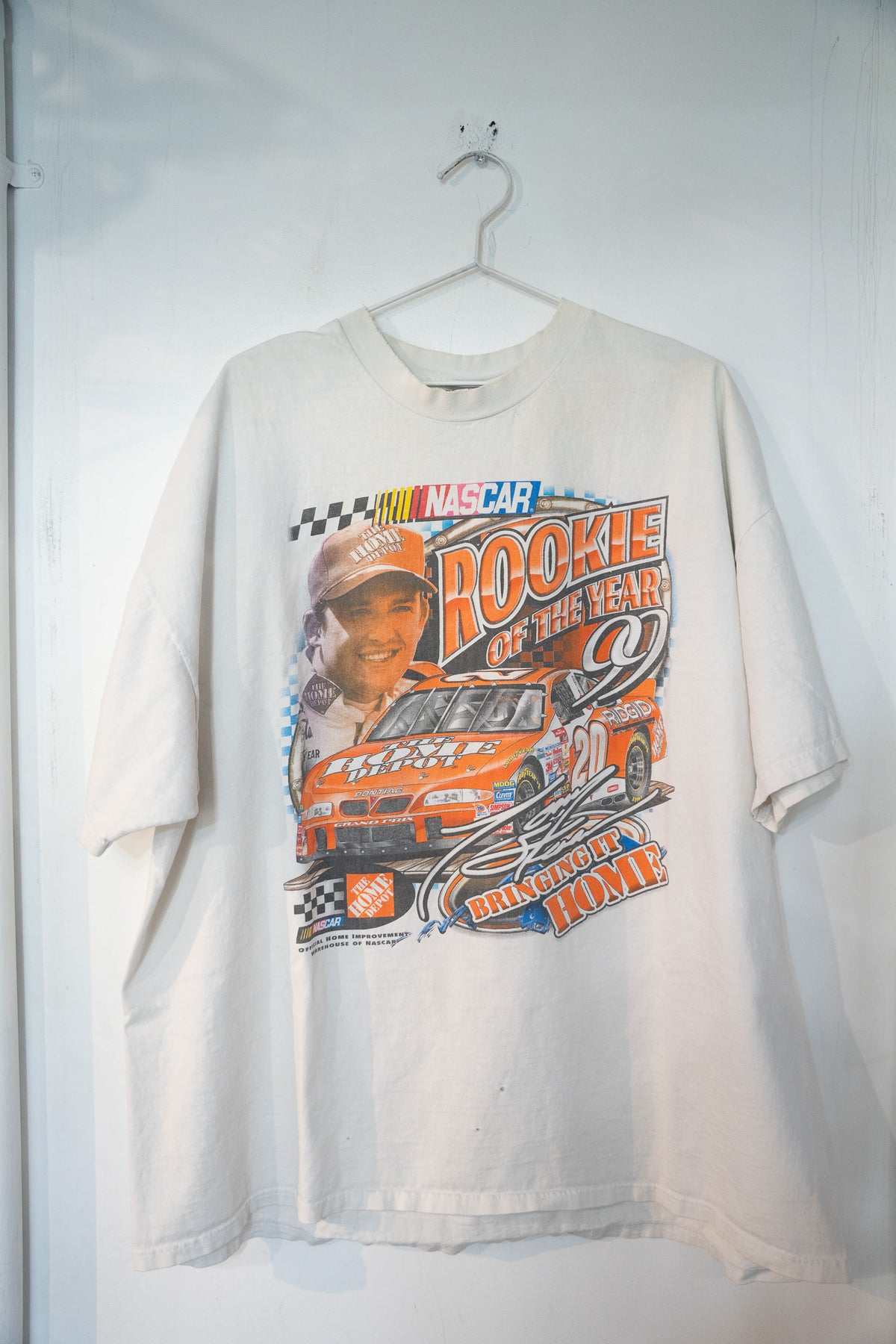
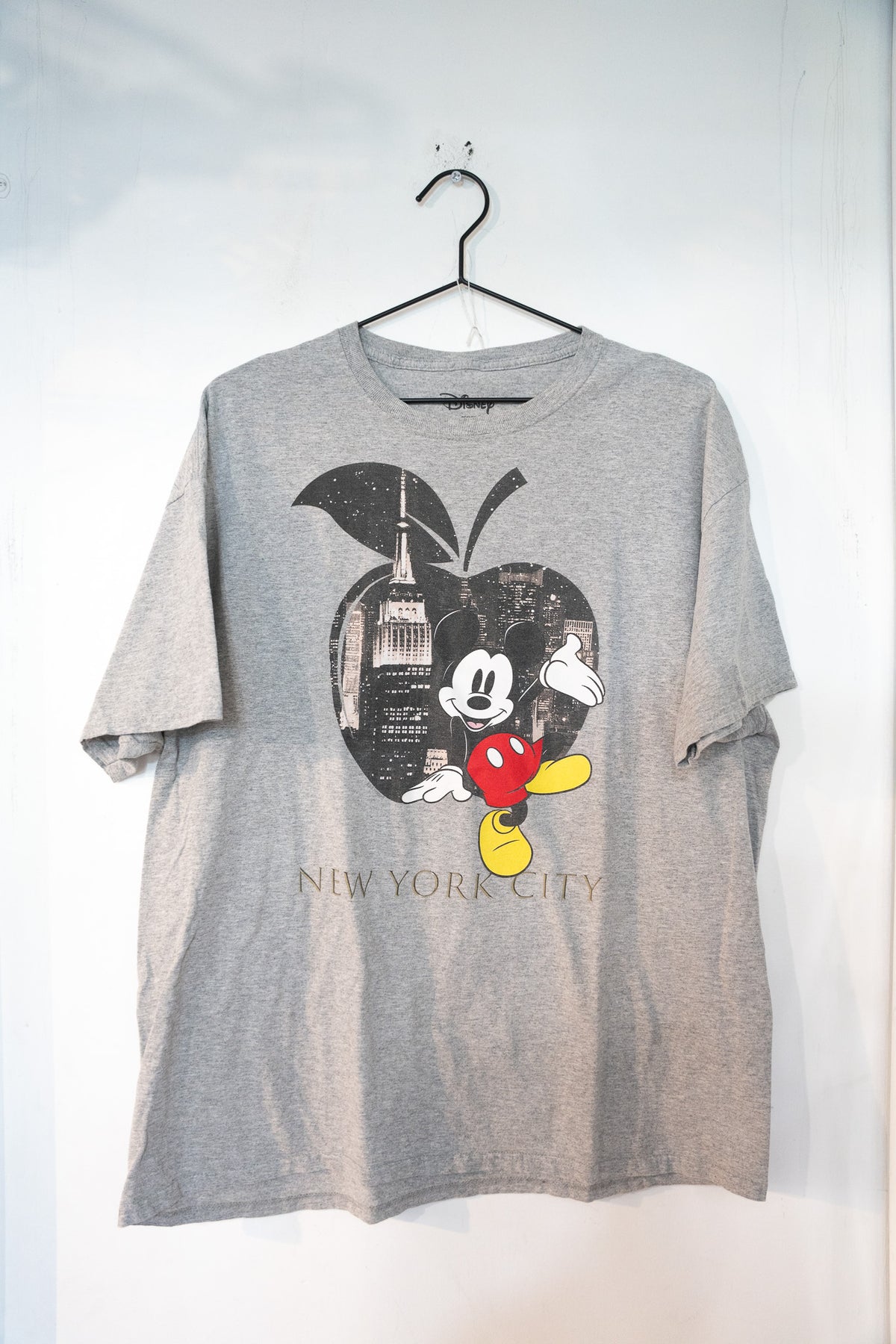
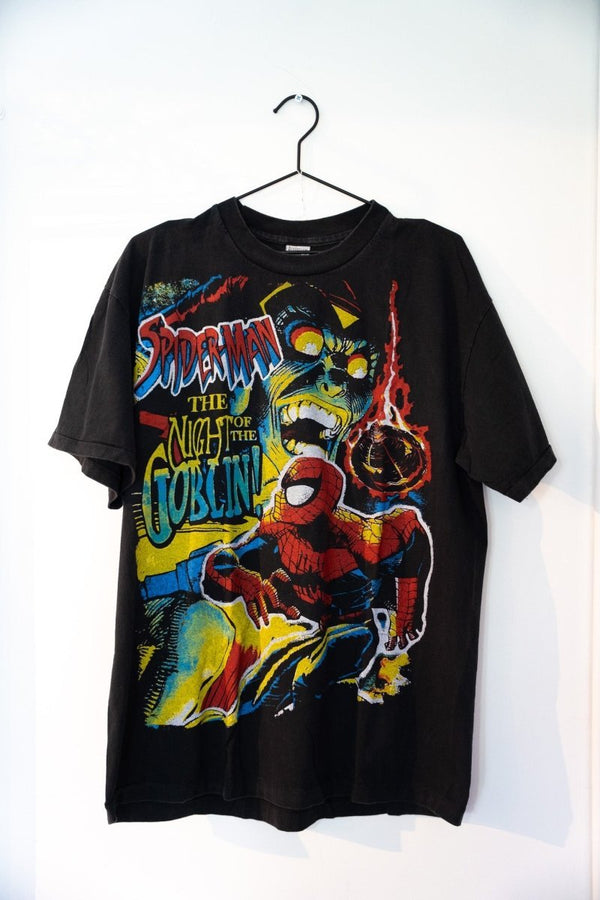
What we look for when we grade a 2000s tee for the floor: legible neck label or printed neck graphic, no underarm yellowing past the seam, no holes along the front-print stress lines, fabric hand consistent with the era's blank weight (4.5 to 5.5 oz on most retail blanks, 6.0+ oz on the heavyweight licensed tier), and a print that has aged honestly. We also flag cultural-context items (specific sports franchises, specific event tees) for the cultural-risk gate before they go on the floor.
VHS twilight, DVD, and the optical-disc gaming peak
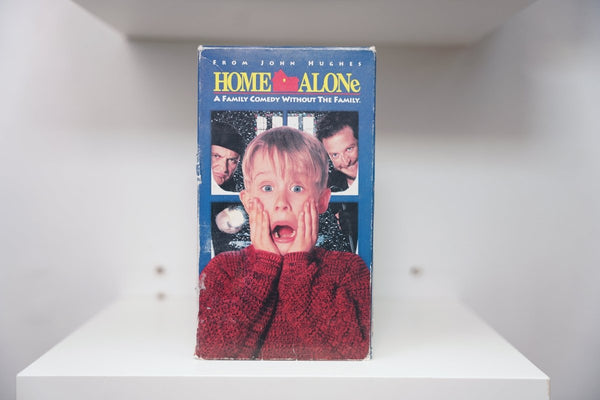
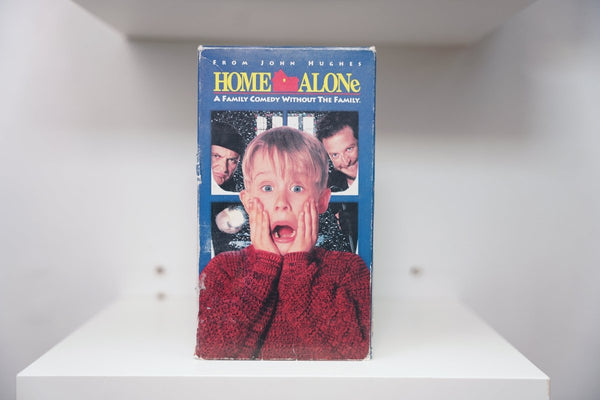
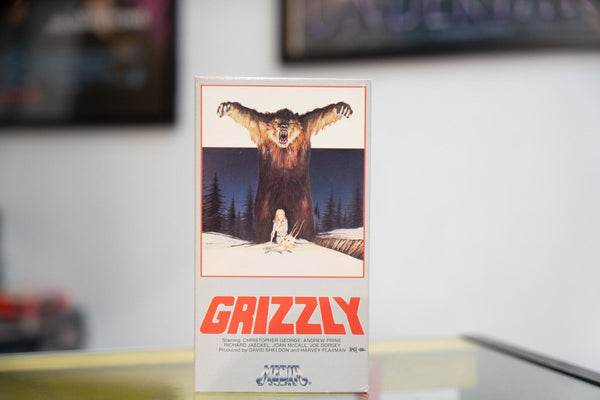
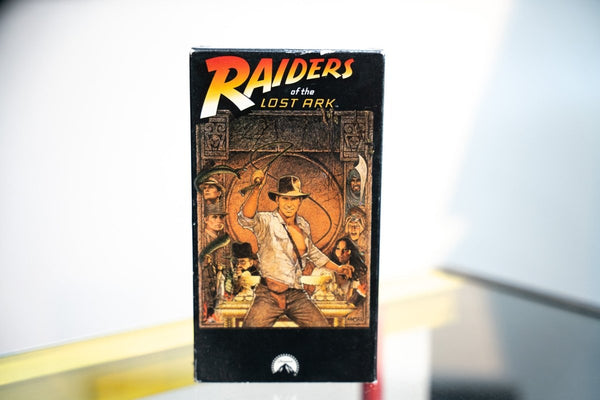
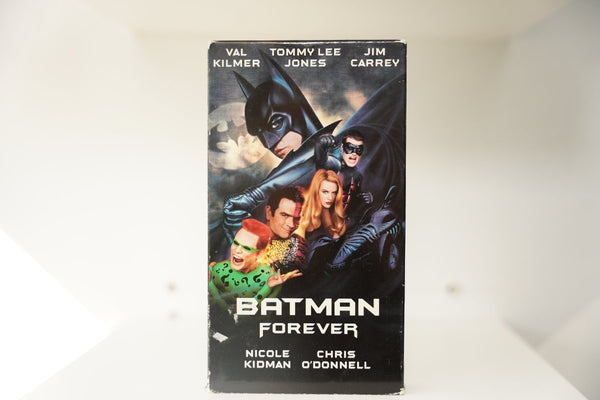
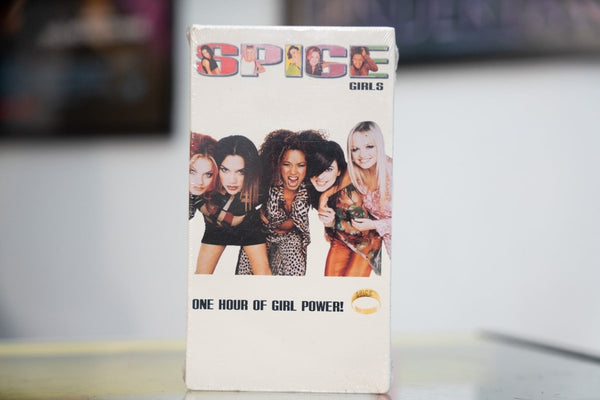
The 2000s is the format-transition decade. VHS sell-through ended in 2006 when the major studios stopped releasing new titles on the format. The final Hollywood VHS releases (A History of Violence in the U.S. early 2006, a handful of family titles slightly later) close the format's commercial run. VHS inventory dated 2000 to 2006 still flows through the shop in volume because the format was still on shelves through the first half of the decade, but the new-release window narrowed each year. The 2000s VHS we grade through is mostly catalog-reissue and family-title sell-through. The collector pricing for the decade is thinner than 1990s VHS by a wide margin, with a few category exceptions (final-year horror releases, the last-issued Disney clamshells, late-window Saturday morning cartoon compilations).
DVD became the dominant home-video format through the decade. The 2000s DVD case is the recognizable artifact: the keep-case clamshell, the snap-case variant, the slim multi-disc case for boxed sets. DVDs as a collectible category are still maturing as a market. We stock select DVD inventory (sealed first-print runs of high-demand catalog titles, complete TV-series boxed sets that survived intact) and price them against the live secondary market rather than against any historical convention. The DVD market reads more like a contemporary used-media market than like the established VHS or cartridge collector markets, and we set our floor and ceiling accordingly.
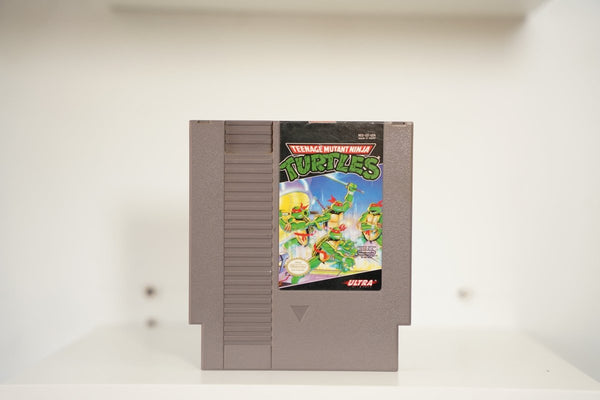
For retro video games, the 2000s is the optical-media peak. The PlayStation 2 launched in North America in October 2000 and went on to become the best-selling console of all time, with production continuing through 2013. The Xbox launched in November 2001, the GameCube in November 2001 alongside it, and the trio defined the early-decade console market. The Xbox 360 (November 2005) and PlayStation 3 (November 2006) shifted the second half of the decade into the next generation. Handhelds were their own category: the PSP (March 2005 in the U.S.) and the Nintendo DS (November 2004) ran the portable market through the back half of the decade.
The collector signals for 2000s gaming inventory are different from the cartridge era. For PS2, the dating tells are the print run on the disc surface (black-bottom early launch discs are the earliest production run, silver-bottom is the standard later run), the case style (Sony shifted from a flatter blue case to a slightly different blue case mid-cycle), and the manual paper stock. For Xbox, the green case is the universal format and the disc print run plus the manual revision date are the cleaner tells. For GameCube, the mini-DVD optical media in the smaller case is the platform's signature artifact, and complete-in-case GameCube titles with the manual intact are the platform's price ceiling.
For all three platforms, sealed first-print copies of high-demand titles trade at a separate ceiling from used or resealed copies. We grade and disclose seal status, factory shrinkwrap versus rewrap, and case condition as separate vectors on every PDP. The retro game collector market polices reseal authentication closely and we list to that standard.
The rise of online retail through the decade ate into brick-and-mortar inventory in a measurable way. By 2008 to 2009 the bulk of new game sales had shifted to online retail and to digital download on the next-generation platforms. The 2000s is the last decade where physical-media gaming was the dominant retail mode for new releases.
Sports jerseys of the 2000s
The 2000s sports jersey market is shaped by three specific licensing transitions and one merchandising explosion.
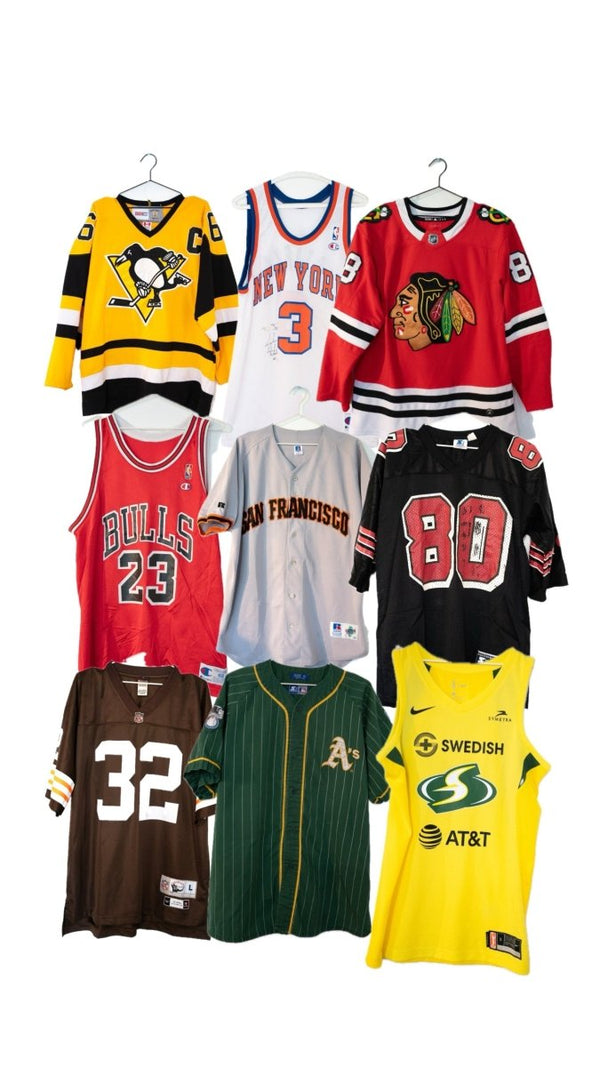
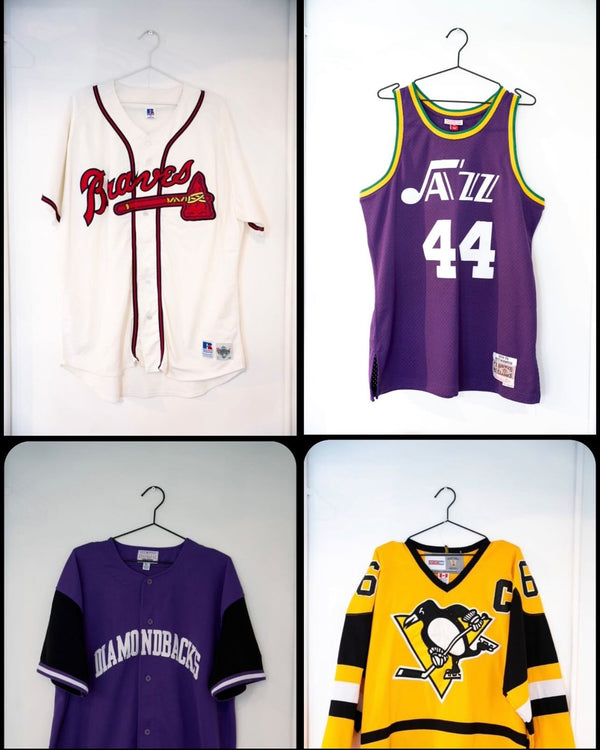
Reebok NFL on-field license (2002 to 2011). Reebok took over the NFL on-field jersey license from prior licensees starting with the 2002 season. The Reebok era ran through the 2011 season, when Nike took over starting with the 2012 season. A Reebok-tagged NFL on-field jersey carries the Reebok wordmark on the lower hem, the NFL Equipment shield on the chest tag, and a sewn-on lettering and numbering system on the authentic tier. The replica tier used screen-print numbering on a lighter-weight body. The 2002 inaugural Reebok season jerseys are a specific category sub-set, and the late-Reebok 2010 to 2011 jerseys close the era. A Reebok NFL jersey is a precise 2002 to 2011 dating window with no ambiguity.
Adidas NBA on-court license (2006 to 2017). Adidas took over the NBA on-court jersey rights from Reebok starting with the 2006 to 2007 season (Reebok had held the license since 2001 to 2002, taking over from Champion). The Adidas era ran through 2016 to 2017. An Adidas-tagged NBA jersey with the Adidas three-stripe wordmark on the lower hem and the NBA Authentics tag is a 2006 forward marker. The Reebok NBA jerseys from 2001 to 2002 through 2005 to 2006 are the earlier window, and the Champion NBA jerseys from 1990 to 2001 to 2002 are the prior era. Each transition is precise within a single season change.
Mitchell & Ness throwback explosion (2001 to 2005). Mitchell & Ness's modern hype-era began with the early-2000s hip-hop adoption of throwback jerseys. The 2001 to 2005 window is when throwback jerseys became mainstream street apparel, driven by music-video visibility, Allen Iverson and the wider NBA throwback wear, and a wave of licensed reissues across MLB, NBA, NFL, and NHL. A Mitchell & Ness throwback from this window carries the brand's small woven flag tag, the chain-stitched tackle-twill numbering, and a per-jersey serial number tag. Production in this window was Reebok-owned (Reebok acquired Mitchell & Ness in 2007, but the licensing partnership and production scaling started earlier in the decade). The pre-2007 M&N tag layout is different from the post-2007 Reebok-era tag layout, which is the cleanest dating tell on the brand for the decade.
Jersey-as-fashion peaks. Across all four major leagues the 2000s is when sports jerseys moved from gameday wear and team-merch to mainstream street fashion. The price floor on authentic jerseys rose through the decade, the replica tier expanded, and the retail surface (mall stores, online direct-to-consumer, team-shop online expansion) widened the audience. The collector market for 2000s jerseys is still maturing. Most authentic 2000s on-field and on-court jerseys we grade through trade against current resale markets rather than against established collector floors, with the exception of star-player, championship-window, and short-tenure-team pieces that have already settled at premium tiers.
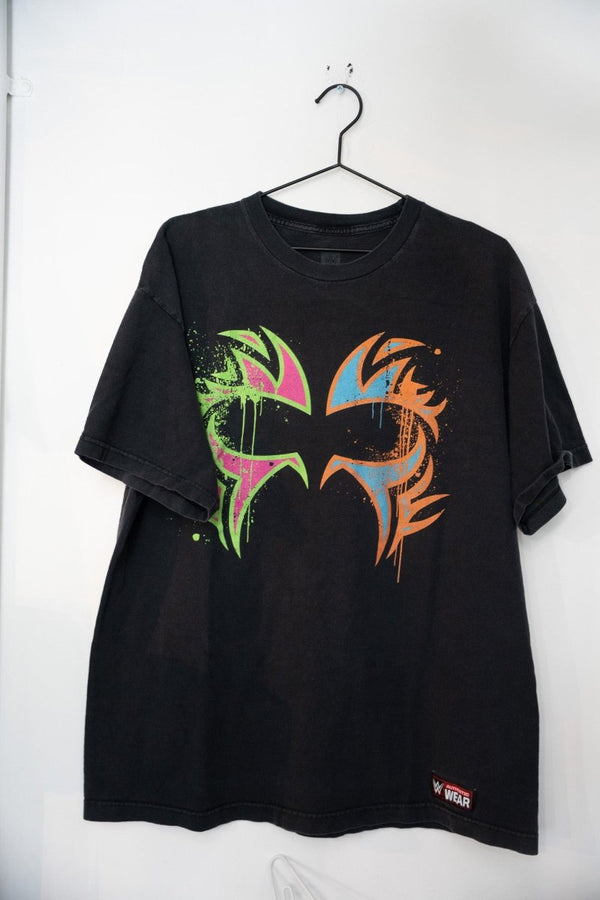
For wrestling, the 2000s is the WWF-to-WWE name change (2002), the Brand Extension era (2002 forward with the Raw and SmackDown roster split), the Ruthless Aggression era, the rise of John Cena and Batista, the early TNA window, and the long tail of legacy and emerging performers that defined the decade's programming. The shirt manufacturers shifted from Tultex (bankrupt 1999) and the 1990s licensed-print shops to a different supply chain through the 2000s, with WWE moving more production in-house and to specific licensed printers. A 2000s WWE-licensed tee with the WWE scratch logo (used 2002 to 2014) is a precise dating window, and the WWF-logo tees from 2000 to 2001 are the prior era. Provenance on 2000s wrestling tees is more accessible than 1990s wrestling tees because the licensing trail is more documented and the production windows are tighter.
A note on cultural-risk: we do not stock or reactivate apparel carrying the discontinued Washington NFL franchise name (the franchise name change came in 2020 and the prior name is restricted across all eras), the discontinued Cleveland MLB franchise name (the change came in 2022 and the prior name plus the prior cap logo are restricted), the Atlanta MLB tomahawk-and-script combination, or any tribal-print or chief-mascot apparel that does not meet our provenance standard. The 2000s produced these in volume across the Reebok NFL and Mitchell & Ness throwback catalogs. They do not go back on our floor.
Cultural touchstones that shaped collectible value today
A few specific moments from the 2000s set the price floors and ceilings we work inside on the bench.
The early-2000s Y2K aesthetic is the decade's most legible visual signature. Low-rise denim, butterfly motifs, baby-tees, mesh tops, rhinestone-applied graphics, frosted-tip hair on the cover of teen magazines, and a specific palette of millennial pink, baby blue, and chrome silver all date to the 2000 to 2004 window. The Y2K aesthetic's resale demand has expanded steadily through the late 2010s and 2020s, and the original-period pieces (not the contemporary reproductions) are the collector tier. We grade Y2K-era pieces against original-tag presence, original print integrity, and fabric hand consistent with the era's blank weights.
Hip-hop merch as fashion is the decade's defining apparel-history moment. The Roc-A-Fella, Sean John, Phat Farm, Rocawear, G-Unit, Ecko Unltd, FUBU, and Akademiks lines all peaked through the decade. Original-period pieces from these lines are the foundation of the 2000s hip-hop collector market. Rocawear and Sean John specifically held wide retail distribution and survived in volume; FUBU and the early-2000s heritage hip-hop labels are the scarcer tier.
Scene and emo aesthetic ran through the back half of the decade. Skinny jeans, side-swept hair, studded belts, band-merch tees from MySpace-era acts (Fall Out Boy, My Chemical Romance, Panic! at the Disco, Paramore, Underoath, Hawthorne Heights, Taking Back Sunday, Brand New, the Used), and the Hot Topic retail surface that catalogued the era. Original-period band tees from this window are a distinct collector category and trade against a specific sub-audience that aged with the music.
The MySpace and early-social-media window (Friendster 2002, MySpace 2003, Facebook 2004, YouTube 2005, Twitter 2006) shifted what brand visibility looked like through the decade. The brands that built early MySpace presence (specific streetwear labels, specific music acts, specific clubwear lines) created a documented period-specific brand corpus that did not exist in prior decades. We use MySpace-era brand documentation when it is publicly available to date 2000s pieces.
The launch of the iPhone (June 2007) and the iPhone App Store (July 2008) close the decade as a media-format hinge. The 2000s is the last decade where the dominant cultural products were physical-media (DVDs, game discs, CDs, magazines, printed band tees) rather than app-distributed and streaming-distributed digital. That transition is part of why the 2000s collector market is still settling: the decade's artifacts are recent enough that the cultural memory is sharp, but old enough that the original-period pieces are getting harder to source clean.
How to spot true-2000s versus late-1990s versus early-2010s
The decade boundaries are fuzzier on the 2000s than on any prior decade. The manufacturing transitions ran through tighter windows, the format shifts compressed, and the tag-format changes happened in a band of three to five years rather than a clean break. A few cleaner tells we use on the bench.
Sewn tag versus printed neck label. A sewn neck tag on a 2000s blank reads early-to-mid decade. A printed-on neck label (tagless) reads mid-to-late decade and beyond. The transition window across most major blank makers is roughly 2005 to 2009. A fully tagless tee from a major retail blank reads 2008 forward almost universally.
Country of manufacture. "MADE IN U.S.A." on a Hanes, Fruit of the Loom, Anvil, or Jerzees blank is reliably pre-2002 (the offshore shift was a 1999 to 2002 window). "MADE IN HONDURAS," "MADE IN HAITI," "MADE IN MEXICO," "MADE IN EL SALVADOR" on the same blanks reads 2002 forward. The country tag is a hard ceiling on early-2000s versus late-1990s dating for any U.S.-major blank.
Licensed-tee copyright year. Most 2000s licensed tees carry a printed copyright year on the front-print or the neck-tag area. The copyright year is the most reliable single date marker on any 2000s licensed tee, more reliable than the tag layout.
Wash-care label format. The wash-care label format shifted from a single sewn-on label with care symbols and country of manufacture to a printed-on care graphic alongside the printed neck label. The shift window is roughly 2005 to 2009 across major blank makers. A separate sewn wash-care label reads earlier, a printed-on wash-care graphic reads later.
Reebok NFL versus Nike NFL. A Reebok-tagged NFL jersey is precisely 2002 to 2011. A Nike-tagged NFL jersey is precisely 2012 forward. The transition is a single off-season change and there is no overlap.
Adidas NBA versus Reebok NBA. A Reebok NBA jersey is precisely 2001 to 2002 through 2005 to 2006 (six seasons). An Adidas NBA jersey is precisely 2006 to 2007 through 2016 to 2017 (eleven seasons). The Champion-to-Reebok transition is the prior-decade boundary; the Adidas-to-Nike transition is the next-decade boundary.
Mitchell & Ness pre-Reebok versus Reebok-era tag. The Mitchell & Ness tag layout used 2001 to 2007 is different from the layout used 2007 forward (after Reebok acquired the brand). The pre-Reebok tag is the earlier-decade marker. The serial-number tag location and the Mitchell & Ness wordmark rendering are the cleaner visual checks.
PS2 black-bottom versus silver-bottom disc. A PS2 disc with a black underside is an early launch-window production run (roughly 2000 to 2002 in North America). A silver-underside disc is the standard later production run. The disc-bottom color is a one-second visual check.
WWE scratch logo versus WWF logo. The WWE scratch logo entered use in May 2002 and ran through August 2014. A WWE scratch logo on a tee is precisely 2002 to 2014. A WWF logo on a tee is precisely pre-May-2002. The lawsuit-driven name change is the cleanest dating tell on 2000s wrestling apparel.
DVD case format. The standard DVD keep-case format ran throughout the decade. The slim multi-disc keep-case (used on TV-series boxed sets) entered use mid-decade. The Disney DVD case design refresh in the late 2000s is a recognizable late-decade marker.
None of these signals is sufficient alone. Combined, they triangulate within a two-to-three-year window, and we list with that level of confidence on the PDP. Where the dating is genuinely unclear, we say so.
What is currently on our floor from the decade
The 2000s pieces we have stocked recently sit across the 00s vintage collection, the 2000s collection, the y2k 2000s collection, the y2k t-shirts collection, the vintage NFL jerseys collection, the vintage NBA jerseys collection, the PlayStation collection, the PlayStation games collection, the PS2 collection, the Xbox collection, the broader t-shirts collection, the VHS collection, and the video games collection. Most of what we grade through the bench is single-piece, single-source, and dated by tag, copyright year, manufacturer mark, and platform-specific signals. We do not restock and we do not reissue. When a 2000s piece is gone, it is gone, and the decade's window is narrowing each year as the original-period inventory ages out of the wider used-clothing supply.
For collectors who want to go deeper on the dating and authentication, we keep four reference guides on the site: the wrestling jersey collector guide, the jersey authentication guide, the retro game identification guide, and the SNES cartridge label variants reference. The SNES reference is a 1990s-platform document, but the dating principles (manufacturer mark, copyright year, production-run identification) carry directly into 2000s optical-media and 2000s licensed-apparel grading.
The shop is at 707 East Fremont Street, Suite 1170, ground floor on the east side of Container Park. If you have a 2000s piece you want a second eye on, bring it in. We grade in person and we will tell you what we see, including when the dating sits in a fuzzy band rather than a clean year. Email is info@keepitclassiclv.com.
End of entry · Next Friday: new drop · Every piece one of one