

May 6, 2026 · 1990s · authentication · champion · era-90s · grading · journal · mitchell-and-ness · n64 · retro-video-games · retrospective · single-stitch · snes · starter · vhs · vintage-jerseys · vintage-tees
The 1990s, In The Cases We Stock

The 1990s, In The Cases We Stock
The 1990s is the deepest single decade in our shop. More tees, more cartridges, more tapes, more jerseys come through the door dated 1990 to 1999 than any other ten-year window. There are reasons for that, and most of them have nothing to do with nostalgia. The 1990s was the decade where mass culture, manufacturing capacity, and licensed merchandise all peaked at the same time, and a lot of what got made then was built to last long enough to land in our cases thirty years later.
This is what we have learned about the era from grading, pricing, and selling it every week.
Tees of the 1990s
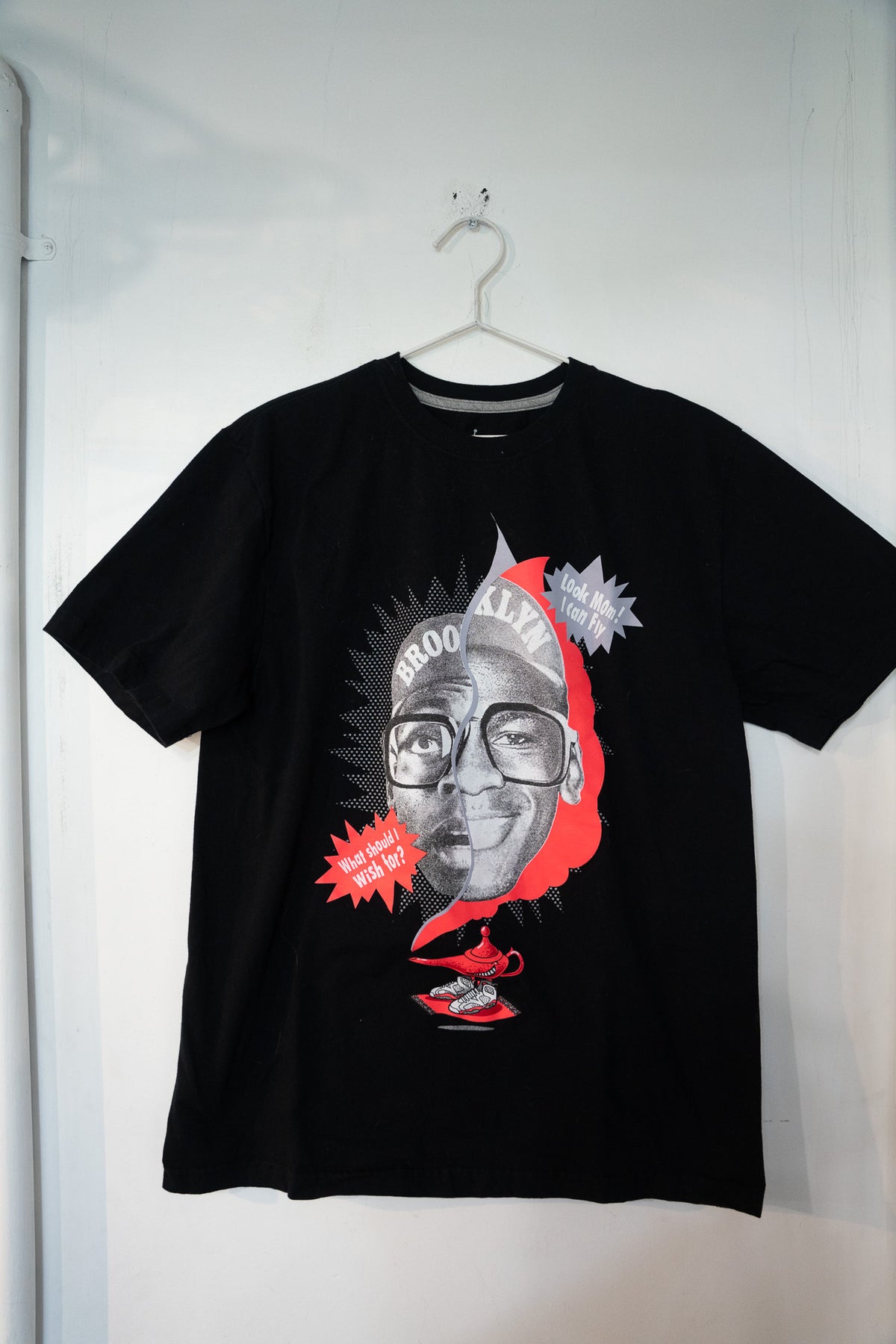
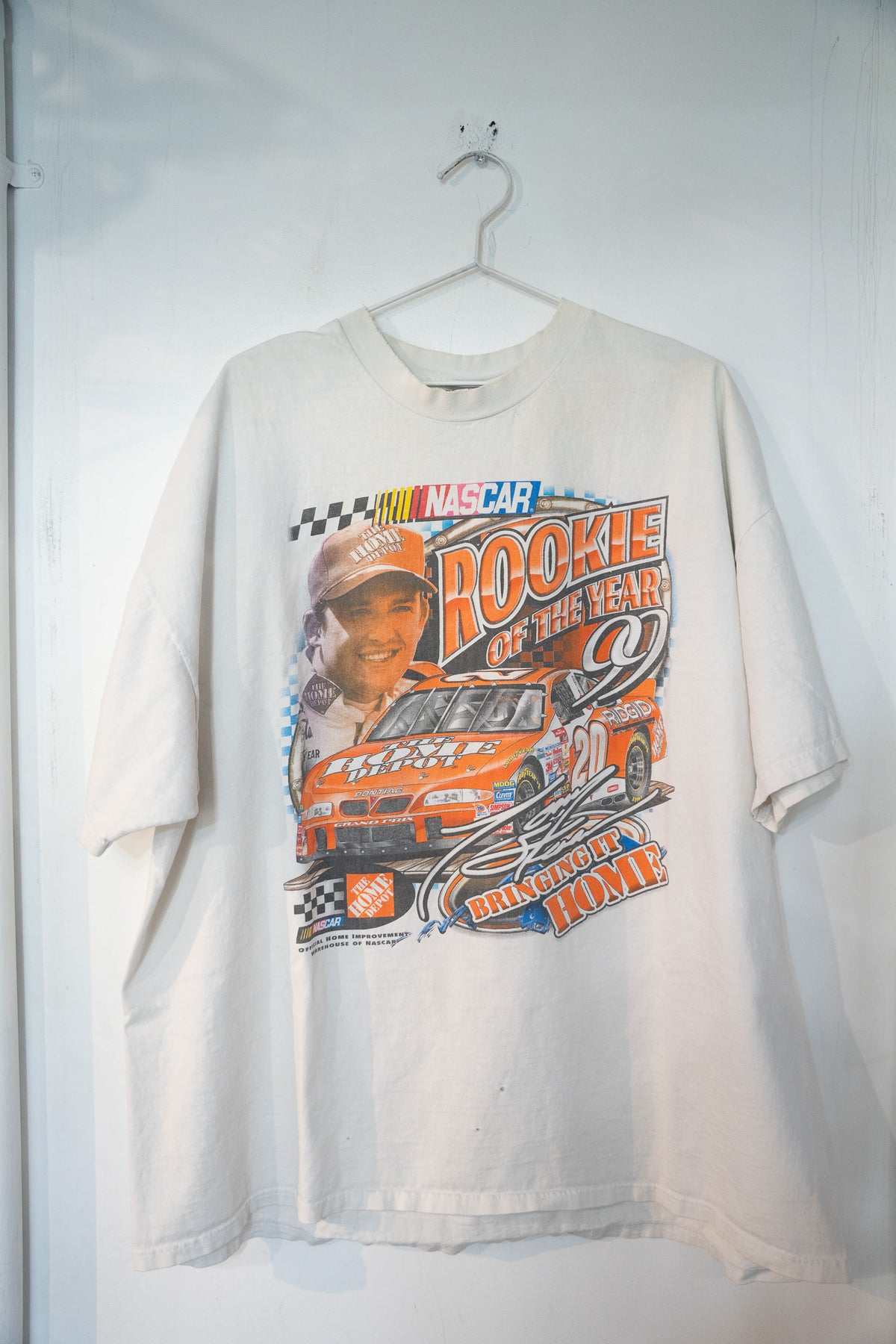
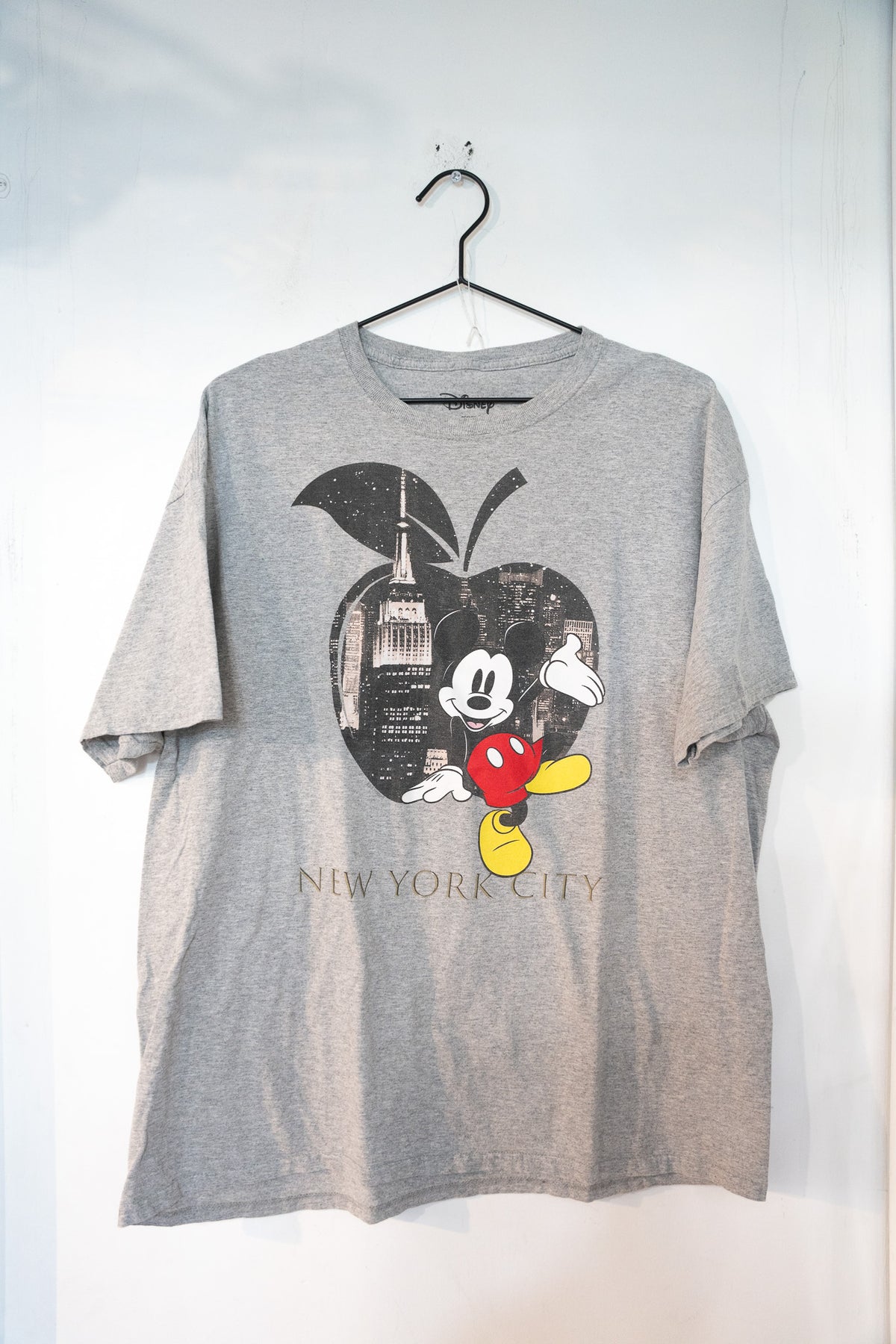
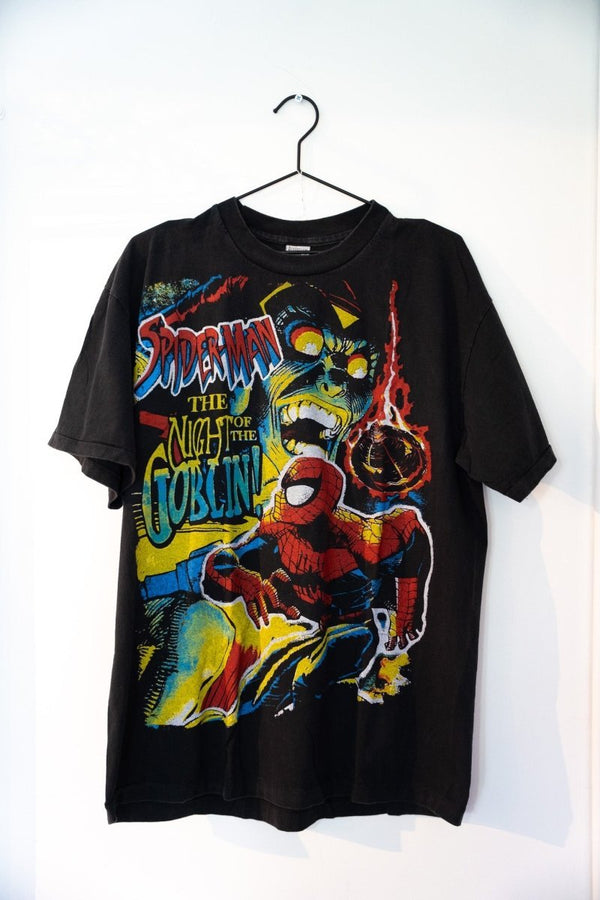
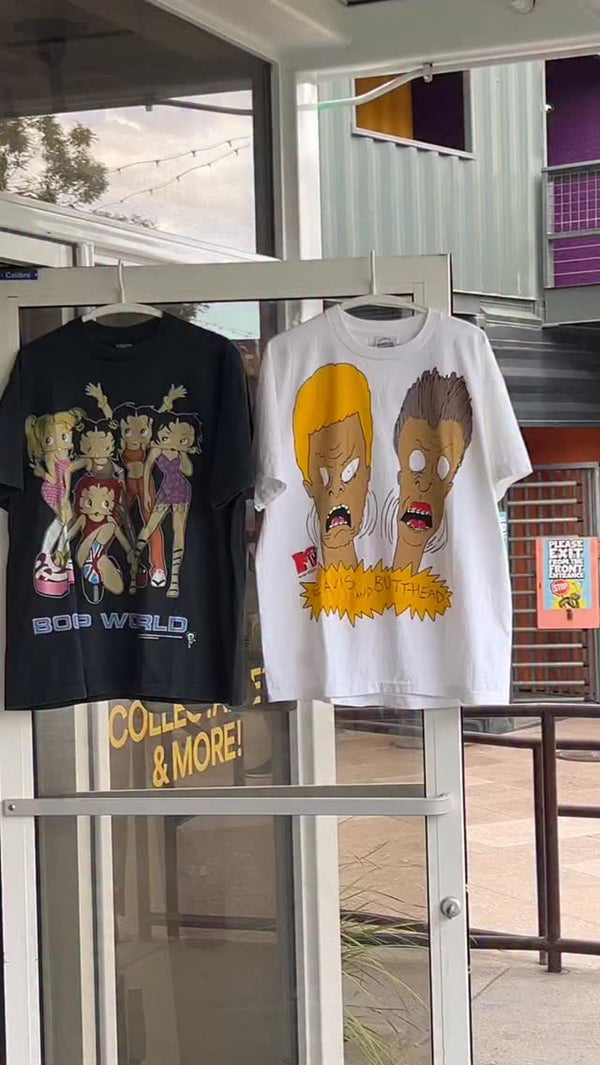
If you pick up a single-stitch tee with a Hanes Beefy-T tag, a Fruit of the Loom gray label, or an early Lee Heavyweight tag, you are almost certainly holding something cut and sewn before 1999. The single-stitch hem and sleeve cuff is the loudest tell. Twin-needle (double-stitch) cuffs and hems became standard on most blank-shirt makers by the late 1990s and were near-universal by 2000. The shift was a manufacturing economy move, not a quality move. A single-stitched edge holds up, sits flat, and frames a print better than a double-stitched edge does.
Label history matters more than fabric weight when you are trying to date a 1990s tee. A few specific calendar markers we lean on:
- Hanes Beefy-T: the gray-and-red tag with "BEEFY-T" in block letters and "Hanes" underlined ran for most of the 1990s. The "Hanes Heavyweight" rebrand and the printed-on neck tag transition started in the early 2000s.
- Fruit of the Loom: the gray tag with the fruit cluster icon and "MADE IN U.S.A." or "MADE IN CANADA" is reliably 1990s. The Honduras and Haiti production marks are mostly post-2000.
- Lee Sport / Lee Heavyweight: a dominant licensed-tee blank for sports, racing, and event merch through the decade. Lee Sport stopped being a licensed apparel name in the early 2000s, so a Lee Sport tag is a near-automatic 1990s or earliest-2000s read.
- Anvil, Jerzees, Tultex: all cut tees in the U.S. through most of the decade. Tultex specifically went bankrupt in 1999, which makes a Tultex tag a hard ceiling.
- Screen Stars Best: the workhorse soft-blank for band tees and touring merch through the 1980s and into the early 1990s. A Screen Stars Best tag with a single-stitch hem reads 1990 to 1995 reliably.
Print technology shifted across the decade too. Plastisol prints from 1990 to about 1995 sit with a slightly heavier hand and a softer crack pattern than the thinner water-based and discharge inks that came in later. The "puff print" peak was 1990 to 1993, and a true puff print on a single-stitch tee is one of the easier-to-date combinations on the table.
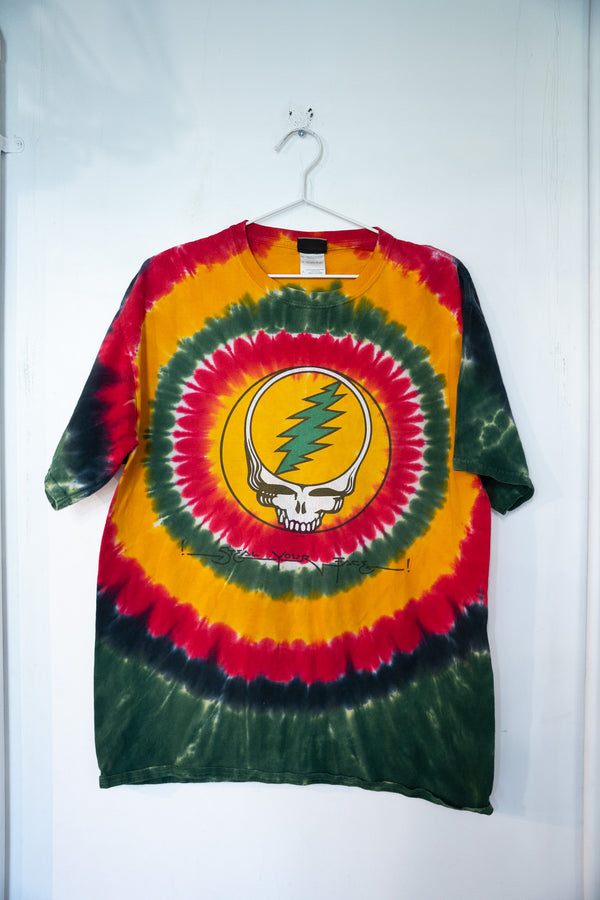
What we look for when we grade a 1990s tee for the floor: even fade across the body (suggests honest wear, not bleach damage), no underarm yellowing past the seam line, original neck label intact and legible, and a print that has cracked rather than peeled. A cracked print on a faded body is the look most buyers want from a 1990s tee. A peeled or scuffed print rarely is.
VHS and retro video games of the 1990s
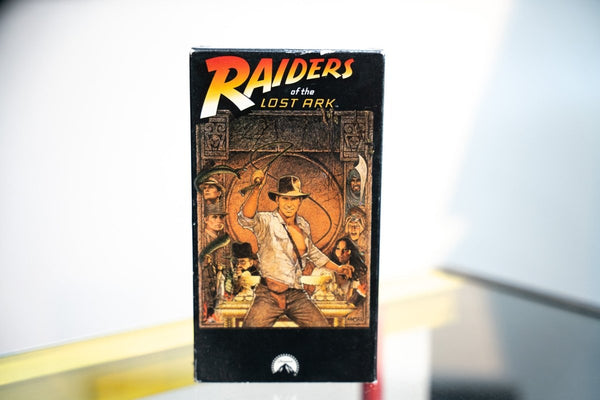
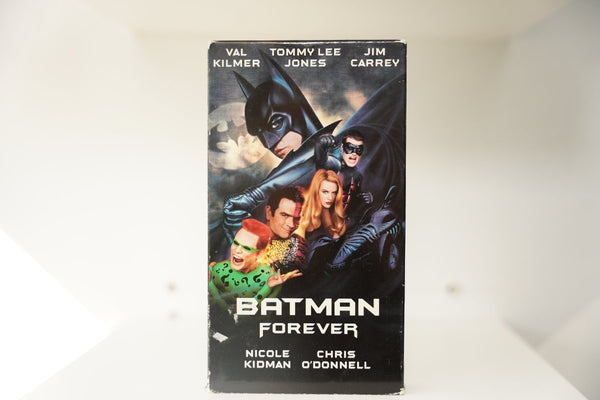
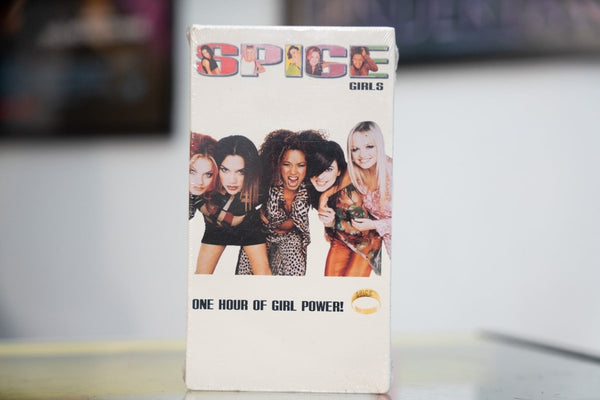
The 1990s is the format peak for both. VHS sell-through (tapes you bought, not rented) hit its commercial high in the mid-to-late 1990s. The Nintendo and Sega cartridge era straddled the decade end-to-end: Super Nintendo released in North America in 1991, the Sega Genesis was already mid-cycle, the Nintendo 64 launched in 1996, and the move to optical media (PlayStation, Saturn, Dreamcast) happened in parallel through the same window. The shop sees more 1990s game and tape inventory than any other decade because that is when the most units were made and bought.
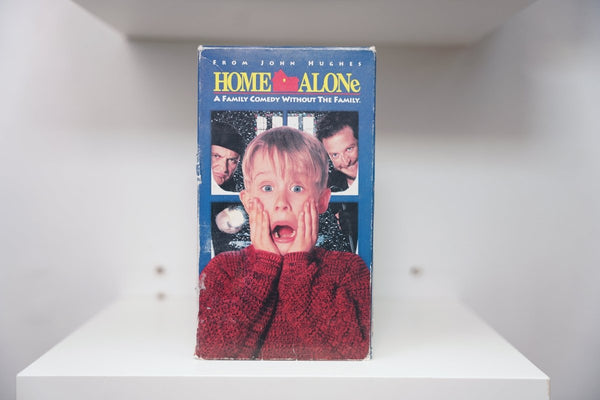
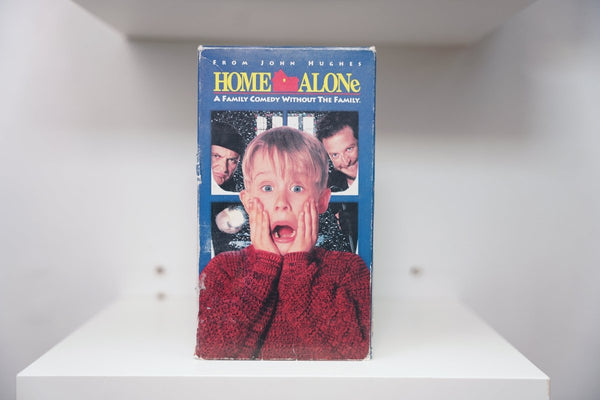
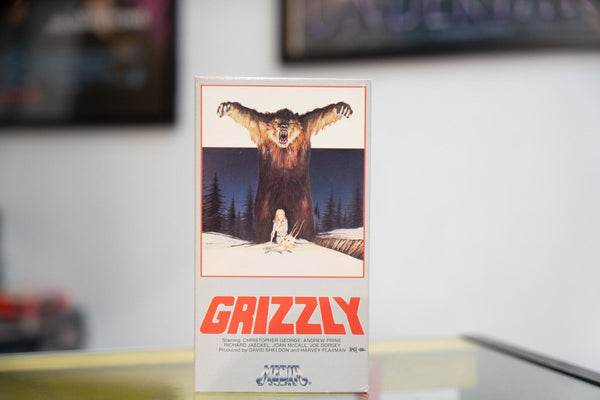
VHS jewel cases and clamshells from the 1990s carry a few visual cues that hold up in grading. The Disney "Black Diamond" Classics line ran from 1984 through about 1994, then transitioned to the Masterpiece Collection. A Black Diamond label on a 1990 to 1994 release is still common in the wild. The condition that drives price is shrinkwrap-intact, hub-clean, hinge-tight, with the original outer slipcase or O-ring on releases that shipped with one. We grade each tape on those four factors, not on the cardboard alone.
For Disney specifically, the value gradient on Black Diamond tapes has been heavily mythologized online. Most Black Diamond releases are common. A short list of titles (early Beauty and the Beast, certain Little Mermaid variants) trade at meaningful premiums; the rest are five-to-fifteen-dollar tapes. We price every Black Diamond title by its specific catalog number and edition, not by the label.
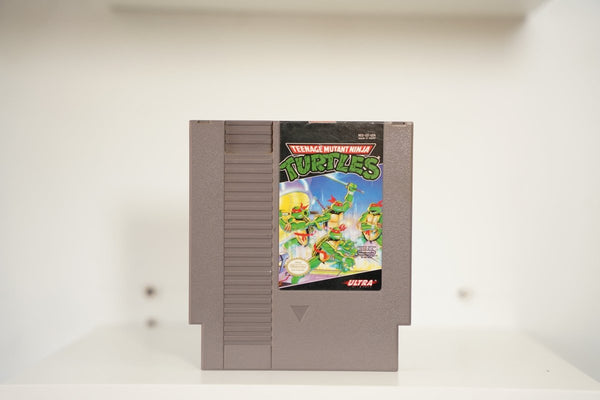
For cartridges, the label and chip-date markers tell most of the story. SNES carts went through several label revisions. The "Player's Choice" green-banded relabel for high-volume titles (Super Mario World, Donkey Kong Country, Star Fox, Zelda: A Link to the Past) is original-1990s and authentic, but it is a budget reissue label and reads to collectors as a lower tier than the original release art. We call out Player's Choice on every PDP because the difference matters to the buyer. Original-art SNES carts from 1991 to 1994 are the price ceiling.
Nintendo 64 carts (1996 to 2001 in North America) carry their own label tells. The end-label registration mark, the cartridge color (gray default, color-variant carts on a small number of titles like Donkey Kong 64 and Pokemon Stadium), and the back-label region code all factor in. Cartridge color variants are cosmetic only on most titles, but the market prices them as a separate SKU and we list them that way.
Sega Genesis cartridges are a quieter market than SNES or N64 but they have their own grading standard. The cardboard outer box with intact corners is what drives Genesis pricing more than the cart itself, because cardboard survived poorly. A Genesis cart with a clean cardboard box is rarer than a clean SNES cart with original Nintendo box, even though SNES is the more famous platform.
Jewel-case aesthetics across both formats settled into a recognizable 1990s look: matte cardboard, two-color or four-color offset printing, manufacturer date codes inside the case spine, and a publisher logo on the back panel that placed the title inside a series. The look is functional and tactile in a way that the next two decades of slim plastic optical-media cases never matched.
Wrestling and sports jerseys of the 1990s
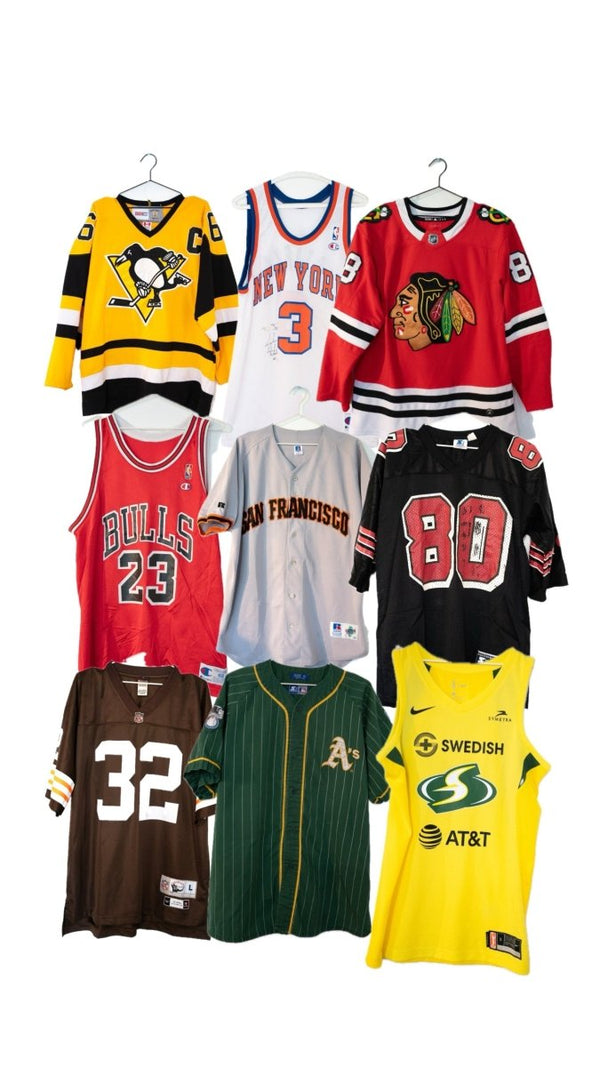
The 1990s is the single best decade for licensed sports apparel that survived. Three manufacturers shaped what came out of the era and what we now stock.
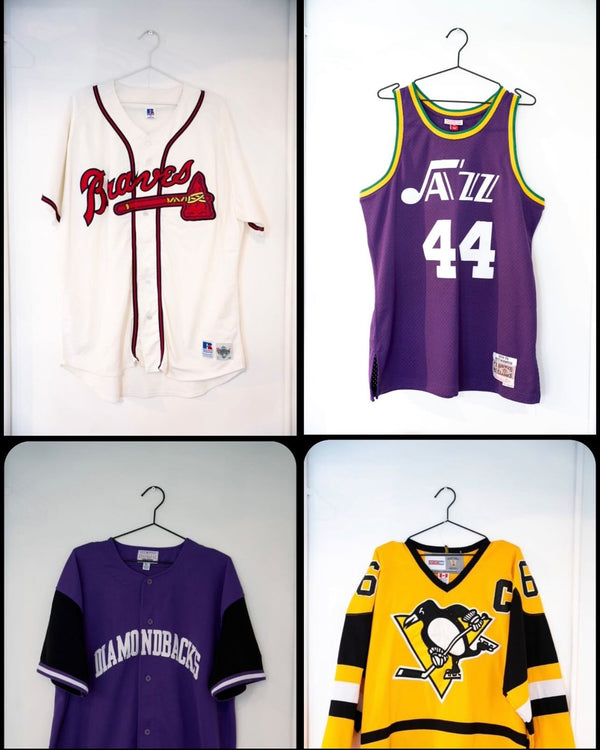
Mitchell & Ness in the early 1990s is not the Mitchell & Ness most buyers know today. The brand started as a Philadelphia sporting goods shop in 1904 and built its throwback business through the 1980s. The Cooperstown Collection MLB throwback license came in 1986, NBA Hardwood Classics later. Through the early-to-mid 1990s the production was small-batch, U.S.-cut, with chain-stitched tackle-twill numbering. A pre-2000 Mitchell & Ness jersey carries a small woven flag tag, "MADE IN U.S.A.", and a per-jersey serial number on a separate tag. The look and weight are noticeably different from the Reebok-era M&N that took over in the 2010s.
Starter is the brand that made the 1990s sports jacket and jersey what it was. The pullover satin Starter jacket, the half-zip pullover, the licensed NFL and NBA satin jersey, the snapback fitted hat with the Starter star logo on the back, and the full-zip warmup all came out of the same Connecticut-based licensor through the decade. Starter held the NFL on-field license from the late 1980s through 1996, and held NBA, MLB, and NHL licenses across overlapping windows. A Starter NFL pullover from 1990 to 1996 is the highest-demand on-field-license window for the brand. After 1996 the NFL license moved to other manufacturers and Starter's price point and cultural pull both stepped down.
Champion held NBA on-court jersey rights from 1990 through 2002. A Champion-tagged NBA jersey with a single-stitch hem, a "MADE IN U.S.A." tag, and the Champion-C logo on the lower hem is an authentic 1990s on-court-pattern jersey. Mid-decade Champion shifted some production offshore (Mexico, Honduras), so the country-of-manufacture tag is the cleanest single date marker on the brand.
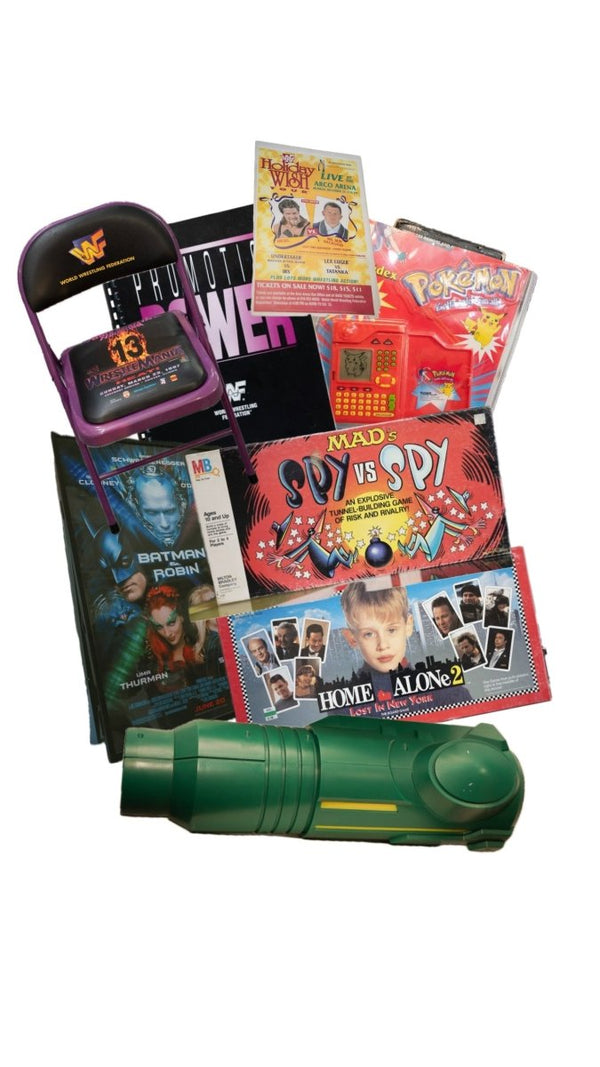
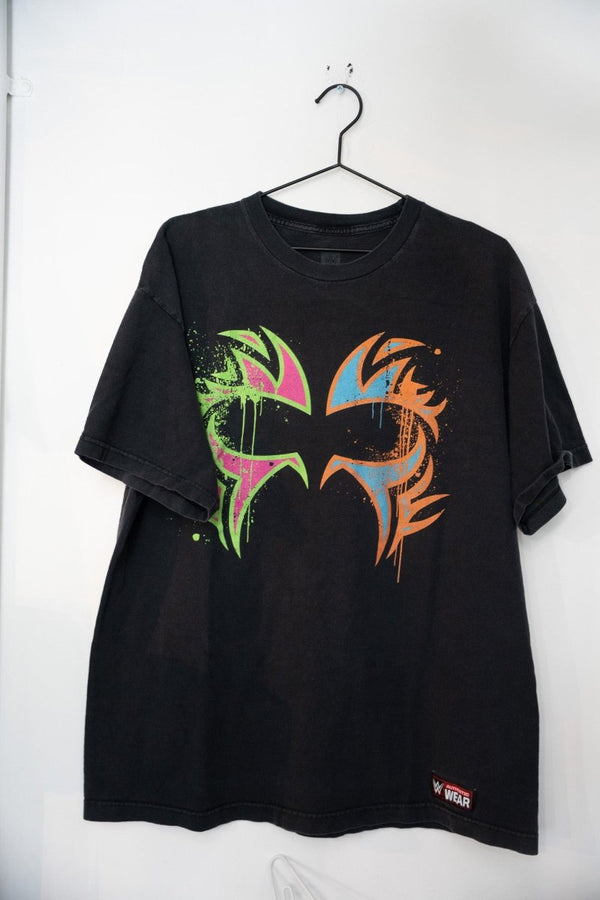
For wrestling, the 1990s was Hulk Hogan's late-WWF and WCW years, the rise of the nWo, the Attitude Era launch (Stone Cold, Mick Foley, The Rock, DX), and the WCW Monday Nitro window. The shirt manufacturers were Tultex, Hanes Heavyweight, Lee Sport, and a long tail of small licensed-print shops. We grade wrestling tees on the same criteria as other 1990s tees: tag, stitch, print integrity, body condition. Provenance on a 1990s wrestling tee is rare. We sell what we can date by tag, stitch, and print, and we say "we cannot verify" when we cannot verify.
A note on cultural-risk: we do not stock or reactivate apparel carrying the discontinued Washington NFL franchise name, the discontinued Cleveland MLB franchise name, the Atlanta MLB tomahawk-and-script combination, or any tribal-print or chief-mascot apparel that does not meet our provenance standard. Those items came through the door in the 1990s in volume. They do not go back on our floor.
Cultural touchstones that shaped collectible value today
A few specific moments from the 1990s set the price floors and ceilings we work inside today.
The 1992 Olympic Dream Team made the NBA a global apparel market. Every NBA jersey from 1990 to 1998 is priced against the Dream Team window in some way. Jordan, Magic, Bird, Barkley, Pippen, and the rest established a baseline demand curve for NBA jerseys that has not slipped since.
The Michael Jordan retirement-and-return cycle (1993 first retirement, 1995 return, 1999 second retirement) created three distinct Bulls-jersey price tiers: pre-first-retirement, the 45-numbered comeback window (short and rare), and the 1996 to 1998 second-three-peat window. Each tier is priced and described separately on our floor.
The launch of Cartoon Network (1992) and the long Nickelodeon weekend-block window (the same era) put licensed cartoon merch into mall stores at a scale that has not been matched since. Rugrats, Hey Arnold, Doug, Ren and Stimpy, Rocko's Modern Life, Cow and Chicken, Dexter's Lab, Powerpuff Girls (late 1990s) all generated authentic-period tees, plush, and promo merch that are now the foundation of the cartoon-tee resale market.
Grunge hit mass-market in 1991-1993 and changed what an "authentic" tee looked like. Faded, oversized, single-stitch, often a band tee or a thrifted blank with a print added. The aesthetic did not invent the look (workwear and surplus had been there for decades), but it codified the look as a category. The premium attached to honest-wear single-stitch tees today is a direct line back to that window.
The launch of the Sony PlayStation (1995 in North America) split the gaming market. Cartridge-format collectors and disc-format collectors started pricing differently around 1995-1996. The split is still the cleanest fault line in retro game pricing today.
WWF Attitude Era programming (1997-1999) created a tee market that still sets the ceiling for licensed wrestling apparel from the decade. Stone Cold "Austin 3:16," DX "Suck It," nWo black-and-white, and a long tail of catchphrase tees all date from this window. The catchphrase tee is a 1990s wrestling-merchandising invention.
How to spot true-1990s versus early-2000s
The decade boundary is fuzzy on the calendar but specific on the tag. A few cleaner tells we use on the grading bench.
Single-stitch versus double-stitch hem and sleeve cuff. Single-stitch is reliably pre-1999 on most U.S.-cut blank-shirt makers (Hanes, Fruit of the Loom, Anvil, Tultex, Lee). Double-stitch is reliably late-decade and beyond. A few exceptions exist (some specialty cut-and-sew shops kept single-stitch into the early 2000s), but on a stack of unknown-era tees, the stitch tells the right story 95% of the time.
Tag font and tag layout. The early 1990s gray Hanes Beefy-T tag has a specific kerning on "BEEFY-T" that the late-1990s and 2000s tags do not match. The Fruit of the Loom fruit cluster icon was redrawn around 1996 (the cluster gets thinner, the leaves get sharper), and the post-1996 cluster reads as later-decade. The Lee Sport script is a different weight from the Lee Heavyweight block, and the Sport tag is the earlier one.
Country of manufacture. "MADE IN U.S.A." on a Hanes, Fruit of the Loom, or Anvil blank is reliably 1990s through about 1999. "MADE IN HONDURAS," "MADE IN HAITI," "MADE IN MEXICO" on the same blanks reads early-2000s and later. The major U.S. blank-shirt makers shifted offshore in a tight window between 1998 and 2002.
Print fade pattern. A 1990s plastisol print fades by cracking; a 2000s water-based print fades by lifting and peeling. A cracked print on a faded body reads 1990s. A peeled print on an unfaded body reads later or counterfeit.
Fabric weight and hand. 1990s heavyweight cotton tees (Hanes Beefy-T, Lee Heavyweight, Tultex) are a 6.0 to 6.5 oz cotton with a noticeably denser hand than the 4.5 to 5.0 oz tees that came to dominate in the 2000s. The weight difference is something you can feel in the first second of picking a tee up off the table.
Cartridge end-label rev. SNES carts have several end-label revisions across the run. Player's Choice green-banded labels are 1994 and later. Original art carts on first-print runs of high-volume titles are 1991 to 1993. The end-label tells you which print run you have, which sets the price.
VHS jewel-case spine date code. Most major-studio VHS releases carry a manufacturing date code molded into the case interior or printed on the spine label. The code is the most reliable date marker on the format.
Jersey country-of-manufacture tag. Champion NBA jerseys from 1990 to 1995 are "MADE IN U.S.A." Champion NBA jerseys from 1996 to 2002 are predominantly Mexico or Honduras with the Champion-C logo on the hem still intact. Both are authentic on-court pattern. The country tag tells you which half of the decade you have.
Mitchell & Ness serial tag. Pre-2000 M&N jerseys carry a separate small woven serial tag in addition to the main flag tag. The post-2000 Reebok-era M&N moved the serial to the main tag. The presence of the second tag is the cleanest marker.
None of these signals is sufficient alone. Combined, they triangulate within a two-to-three-year window and we list with that level of confidence on the PDP.
What is currently on our floor from the decade
The 1990s pieces we have stocked recently sit across the 90s nostalgia collection, the jerseys collection, the t-shirts collection, the VHS collection, and the video games collection. Most of what we grade through is single-piece, single-stitch, and dated by tag. We do not restock and we do not reissue. When a piece is gone, it is gone.
For collectors who want to go deeper on the dating and authentication, we keep four reference guides on the site: the wrestling jersey collector guide, the jersey authentication guide, the retro game identification guide, and the SNES cartridge label variants reference. Those are the same documents we use on the grading bench.
The shop is at 707 East Fremont Street, Suite 1170, ground floor on the east side of Container Park. If you have a 1990s piece you want a second eye on, bring it in. We grade in person and we will tell you what we see, including when we cannot date a piece confidently. Email is info@keepitclassiclv.com.
End of entry · Next Friday: new drop · Every piece one of one