



May 6, 2026 · 1980s · atari · authentication · era-80s · grading · journal · logo-7 · nes · retro-video-games · retrospective · salem-sportswear · sand-knit · screen-stars · tour-tees · vhs · vintage-jerseys · vintage-tees
The 1980s, And What Survived To Reach Our Cases

The 1980s, And What Survived To Reach Our Cases
The 1980s sits behind the 1990s as the second-deepest decade in the shop on any given week. It is a different kind of inventory. Less of it survived in clean condition, the print runs were smaller on most of the categories we stock, and the manufacturing tells from the decade are tighter and harder to fake than the ones that came after. When a 1980s piece lands clean on the grading bench, it is usually the result of one closet, one drawer, or one shoebox staying closed for thirty-five years. We grade fewer 1980s pieces than 1990s pieces, and the ones that grade up tend to sit at the higher end of the price ladder for a reason.
This is what the decade looks like from the bench.
Tees of the 1980s
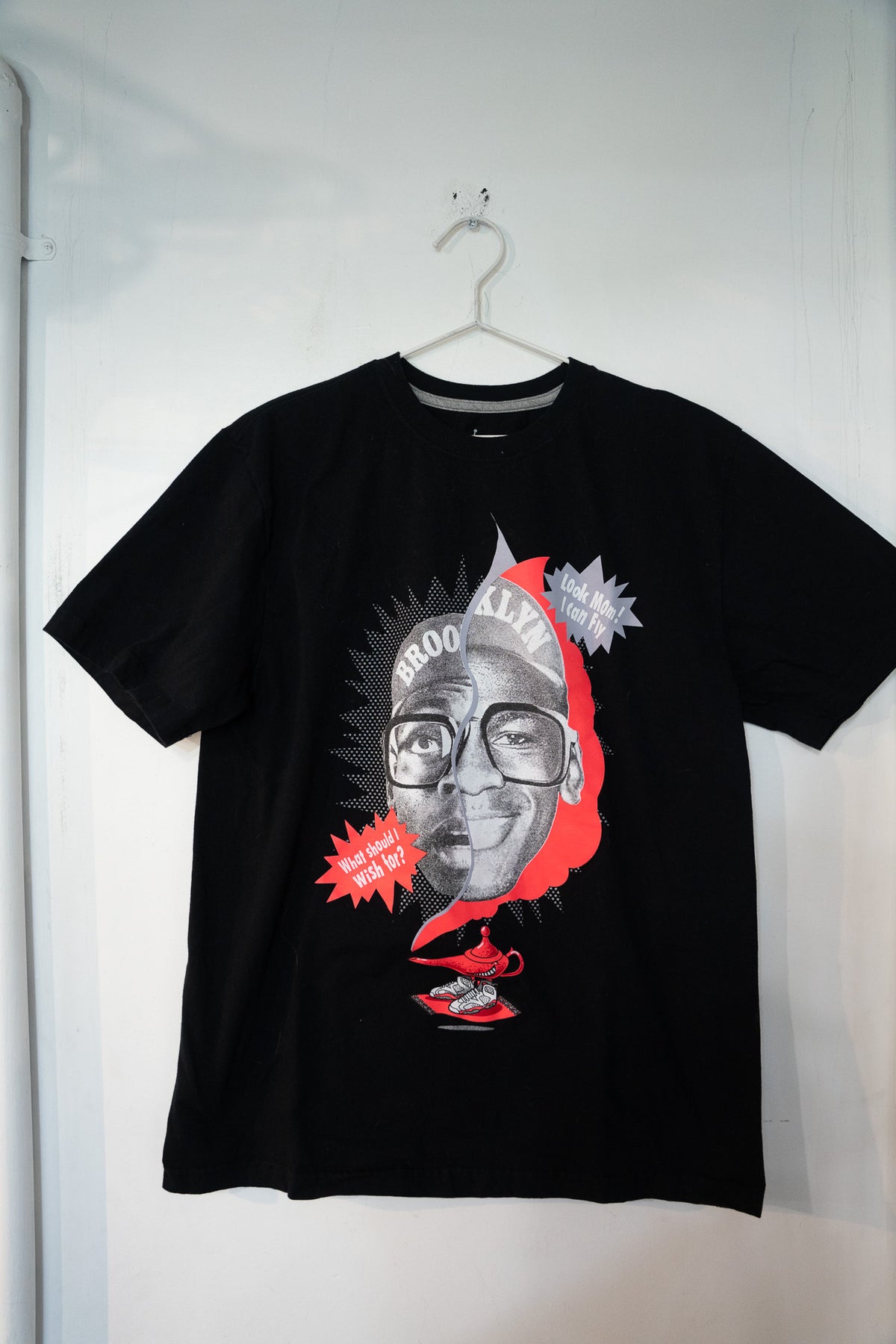
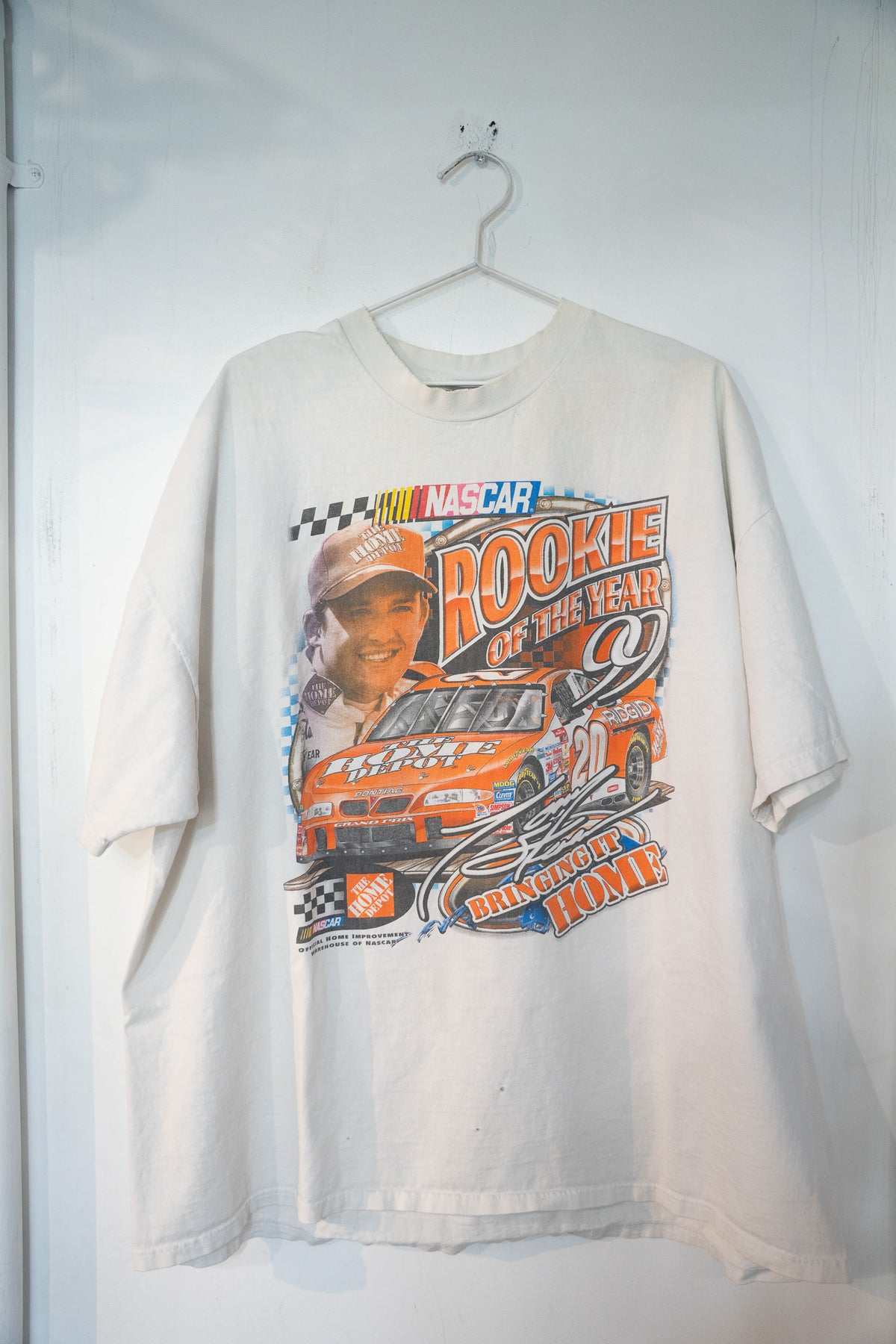
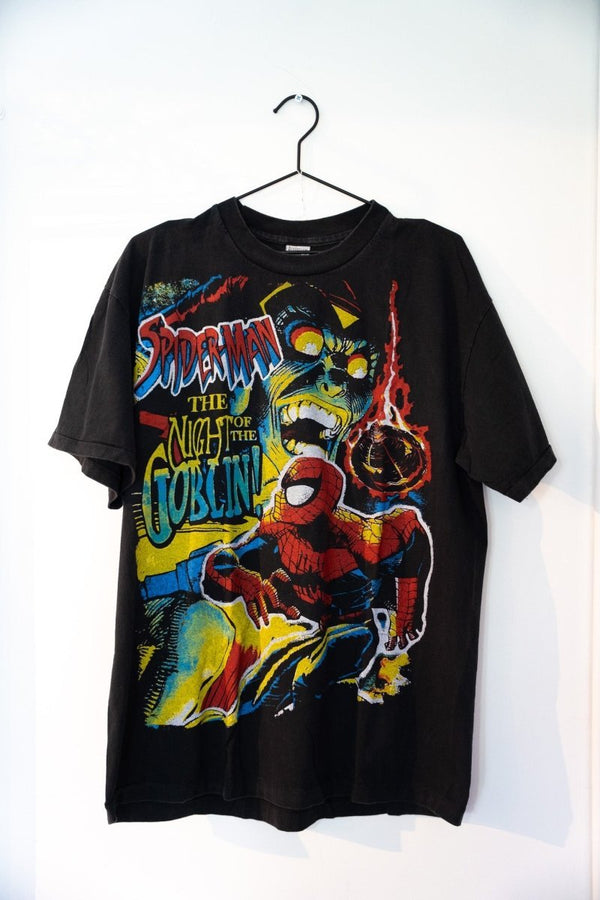
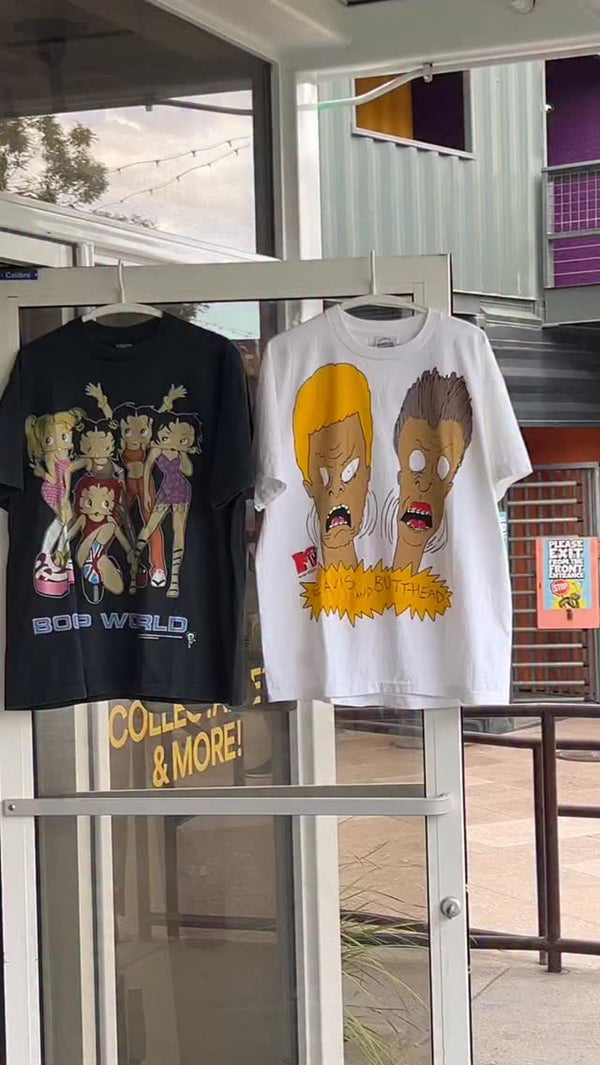
If the 1990s tee is defined by the heavyweight single-stitch blank, the 1980s tee is defined by the soft-blank. Thinner cotton, looser body cut, ringer collars on a meaningful share of the inventory, and a print-handed-on-the-shirt feeling that the heavier 1990s blanks moved away from. A clean 1980s tee picked up off the table feels noticeably lighter than a Hanes Beefy-T from a decade later, and that weight difference is one of the first reads we make.
Label history for the decade is its own discipline. A few markers we lean on every week.
- Screen Stars (without the "Best") is the workhorse 1980s soft-blank label. The plain Screen Stars tag with a single-stitch hem and a ringer or crewneck collar reads early-to-mid 1980s reliably. Screen Stars Best, the heavier-weight successor, took over by the late 1980s and ran into the early 1990s.
- Hanes in the 1980s had the "Hanes Fifty-Fifty" gray tag for poly-cotton blends and a separate all-cotton tag with a different layout from the gray-and-red Beefy-T tag that defined the 1990s. The Beefy-T tag itself launched in the late 1980s, so the earliest Beefy-T tags overlap the very tail end of the decade.
- Anvil in the 1980s was a U.S.-cut blank with a different tag layout than the Anvil tags that came after. The early Anvil tags carry a white background with black text and a square logo. The later layouts are color and font revisions.
- Tultex in the 1980s was already producing licensed-print blanks for the wrestling, racing, and event-merch markets. The 1980s Tultex tag is a plainer rendering than the rounded-corner tags that took over later in the decade and into the 1990s.
- FOTL (Fruit of the Loom) in the 1980s used the original fruit-cluster icon, before the mid-1990s redraw. The cluster on a 1980s tag has thicker leaf outlines and a slightly more cartoon proportion than the later cluster.
- Sportswear, Velva Sheen, Champion all cut tees in the U.S. through the decade. A Velva Sheen reverse-weave or a Champion crew with a Made in U.S.A. tag from the 1980s is a different garment than its later analog: heavier seams, longer body, and a different collar rib density.
Print technology for the decade tells a clearer story than for any later decade. Plastisol prints in the 1980s sit with a heavy hand, a glossy face, and a thick edge that you can feel with a fingertip. A true 1980s print on a 1980s blank cracks in a specific way: large irregular cracks along stress lines, with the underlying ink staying matte where it has cracked open. The puff print era was still ahead in 1980 and ran through the back half of the decade with a different formulation than the 1990 to 1993 puff print peak. Heat-transfer prints (the iron-on look, often used for licensed and souvenir tees) are a 1980s signature that mostly disappeared from major-label production by the early 1990s.
What we look for when we grade an 1980s tee for the floor: original tag intact and legible (label loss is the single most common 1980s tee defect because the soft-blank cottons stretched the neck rib over time), no holes along the front-print stress lines, no underarm yellowing past the seam, no bleach spots, and a print that has cracked rather than peeled or flaked off. A clean 1980s soft-blank tee with an intact tag and an honest-cracked plastisol print is one of the harder pieces to source clean and one of the more rewarding ones to put on the floor.
VHS and retro video games of the 1980s
The 1980s is the format-launch decade for both. Big-box VHS releases (the oversized cardboard outer-box format used for sell-through and rental copies) ran from the early 1980s through about 1991. The Atari 2600 was already mid-cycle at the start of the decade, the video game crash of 1983 reshaped the U.S. market, and the Nintendo Entertainment System launched in North America in 1985 and dominated the back half of the decade. The Sega Master System launched in 1986 and ran behind the NES in U.S. share. Inventory from the decade is thinner than 1990s inventory across both formats, and the condition tells are tighter.
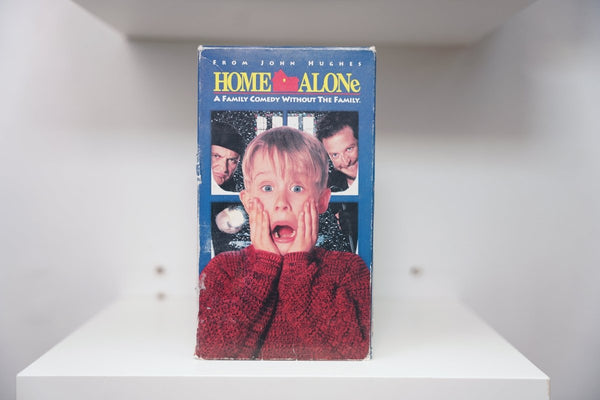
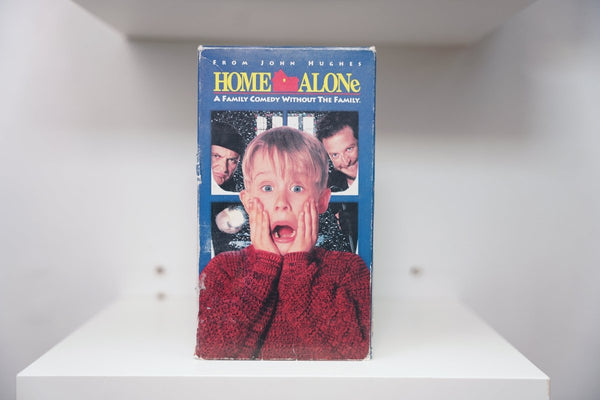
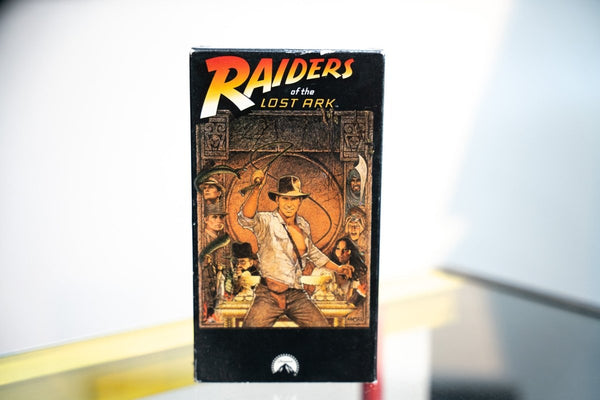
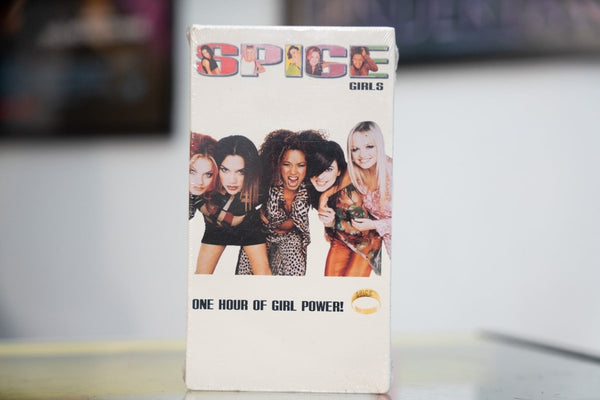
For VHS, the visual signatures of the decade are the big-box clamshell and the oversized cardboard slipcase. The format was still finding its packaging language. Disney's Black Diamond Classics line started in 1984 and ran through about 1994; the early 1980s Black Diamond releases (1984 through 1987) are scarcer than the early 1990s Black Diamond tapes that get most of the online attention. Warner Home Video, MCA Universal, and Paramount each used distinct big-box formats through the decade, and the case style is often a faster date check than the printed copyright.
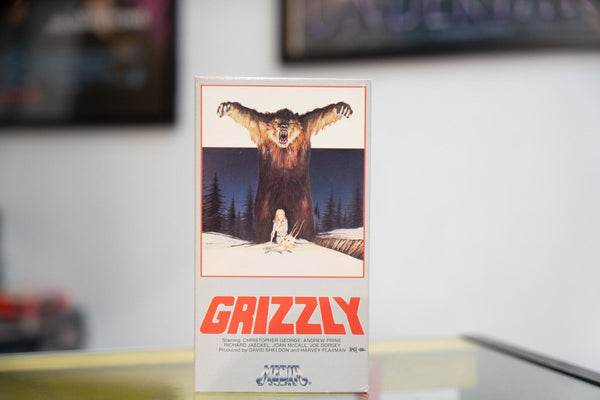
The condition that drives 1980s VHS pricing is the cardboard. Big-box cardboard does not age well. Corner crush, edge wear, foxing, and shelf-rub on the front panel are the four defects we grade against on every cardboard-cased tape. A clean big-box with intact corners, a tight slipcase fit, and a hub-clean tape inside is significantly rarer than its 1990s jewel-case-format successor in the same condition. We price big-box cardboard by condition first, edition second, and title third, in that order.
For Atari 2600, the cartridge-and-box-and-manual format was already established by 1980. Atari, Activision, Imagic, and Parker Brothers each used distinct cartridge label conventions. The condition that drives Atari pricing is the box. Atari boxes are thin, glossy cardboard that wore poorly through closet storage. A complete-in-box Atari title with manual, end flaps intact, and clean cartridge label is the price ceiling for the platform. Loose Atari cartridges trade at the lower tier and are graded against label condition (wrinkle, sticker residue, label tears) and contact integrity.
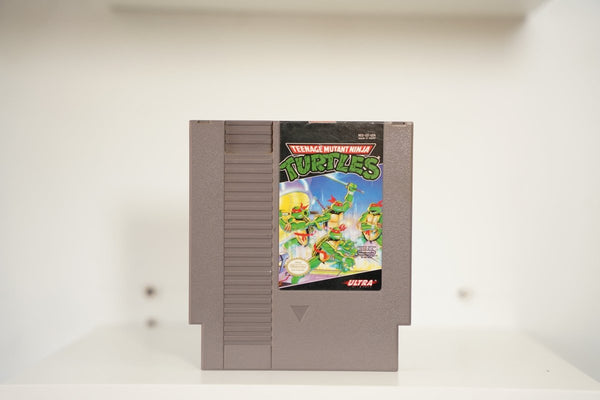
For NES, the gray cartridge with the printed end-label is the recognizable 1980s and early 1990s artifact. Five-screw versus three-screw cartridge construction is the cleanest dating tell on the platform: five-screw cartridges are the earliest production runs (mostly 1985 to 1987) and three-screw is the mid-to-late production rev. The end-label, the cartridge color (standard gray, gold variant on Zelda titles, other limited variants), and the back-label region code all factor into the read. Original cardboard boxes for NES titles are scarcer than the cartridges by a wide margin; complete-in-box NES titles with manual and outer cardboard are the platform's price ceiling. We grade box, cartridge, and manual as separate condition vectors and call out the worst of the three on the PDP.
Sega Master System inventory is quieter than NES through the shop. The cartridge format is different (the Master System used both cartridge and card formats), and the cardboard outer boxes are the rarer survivor versus the carts themselves.
Wrestling and sports jerseys of the 1980s
The 1980s is the decade that built the modern licensed sports apparel market. Three manufacturers shaped what came out of the 1980s and what we now stock.
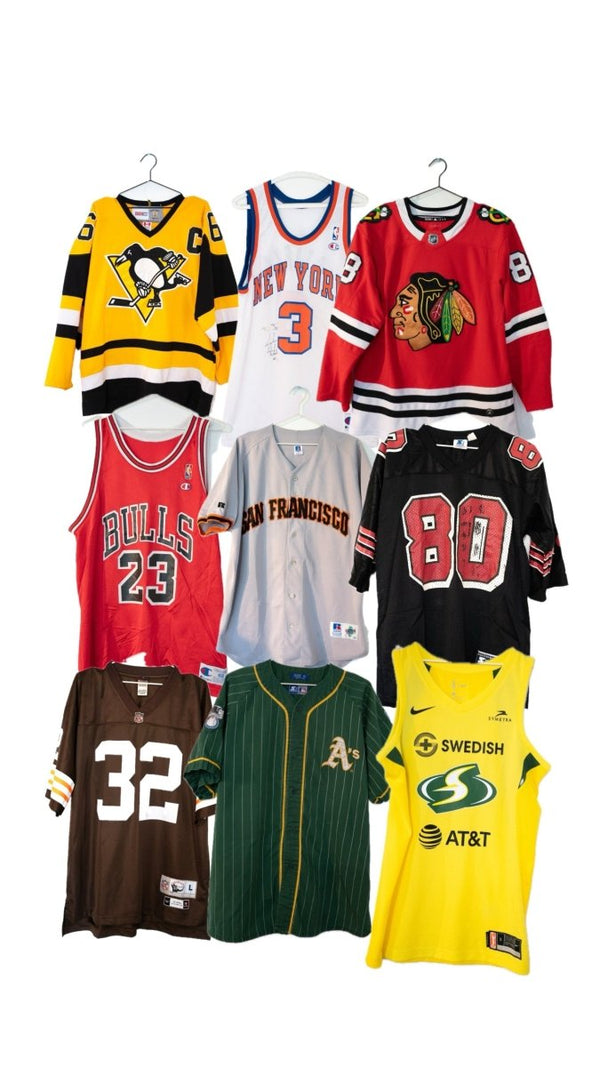
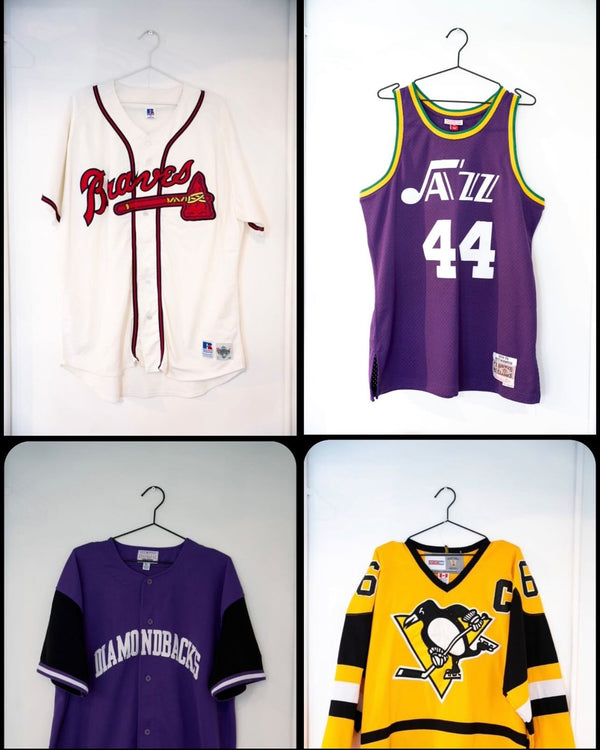
Sand-Knit was the dominant on-court and on-field jersey maker for much of the decade across the major leagues. Sand-Knit MacGregor jerseys carry a distinctive woven flag tag, a heavier knit body than the later mesh constructions, and a tackle-twill numbering and lettering that was chain-stitched on the higher-tier jerseys and screen-printed on the retail tier. A Sand-Knit MacGregor MLB or NBA jersey from the 1980s is one of the harder-to-source pieces in the shop and one of the more meaningful when it lands. The brand was acquired by Russell Athletic in 1992, which makes the Sand-Knit MacGregor name itself a reliable pre-1992 ceiling.
Salem Sportswear held licensed apparel rights for the four major U.S. leagues through the late 1980s and early 1990s. The Salem signature is the all-over print sweatshirt and the cartoon-caricature licensed tee that defined a particular look of late-1980s sports merch. A Salem Sportswear tag with a 1989 or 1990 copyright on a heavyweight sweatshirt is a recognizable category piece. The brand peaked in the early 1990s and faded by the mid-decade.
Logo 7 ran in parallel with Salem through the same window and produced licensed apparel with a different aesthetic, leaning more toward team-color colorblocking and large embroidered or twill-applied team logos. Logo 7 jackets, sweatshirts, and tees from the late 1980s are recognizable by the brand's tag and by the construction (heavier embroidery, more applique work) versus the screen-printed Salem pieces.
Mitchell & Ness in the 1980s was still operating as the Philadelphia sporting goods shop the brand was founded as in 1904, and was building toward the throwback business that would define the brand later. The Cooperstown Collection MLB throwback license came in 1986, which puts the earliest Mitchell & Ness throwbacks inside the decade. A Mitchell & Ness piece with a 1986 to 1989 production date, a small woven flag tag, and a per-jersey serial number is a meaningful early-decade artifact and trades at the higher end of the brand's range.
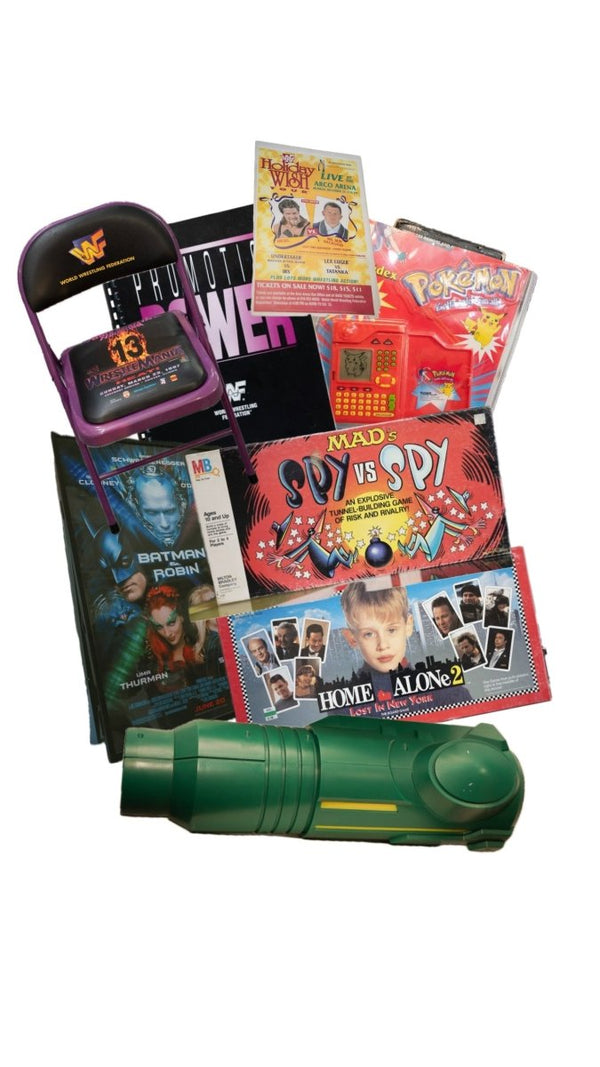
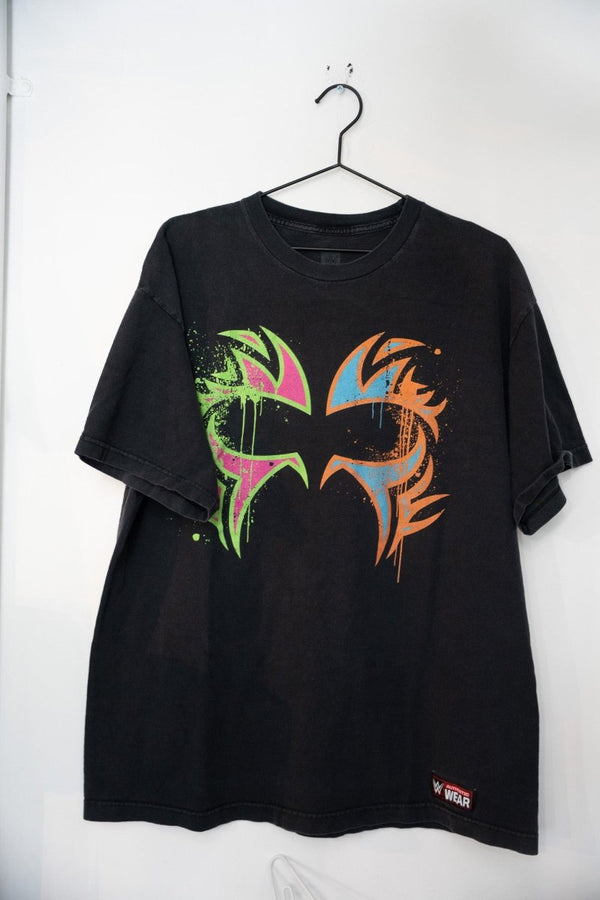
For wrestling, the 1980s is the WWF golden era: Hulk Hogan's Rock'n'Wrestling Connection, the launch of WrestleMania in 1985, the Macho Man, the Ultimate Warrior, Andre the Giant, the Junkyard Dog, and the long tail of WWF, NWA, and AWA programming that ran across the decade. The shirt manufacturers were Tultex, Hanes, FOTL, and a tail of small licensed-print shops. Provenance on a 1980s wrestling tee is rare, and we grade these on the same criteria as other 1980s tees: tag, stitch, print integrity, body condition. The single hardest 1980s wrestling tee to source clean is the original-print WrestleMania-era event tee on a soft-blank with intact tag and an honest-cracked plastisol print.
A note on cultural-risk: we do not stock or reactivate apparel carrying the discontinued Washington NFL franchise name, the discontinued Cleveland MLB franchise name, the Atlanta MLB tomahawk-and-script combination, or any tribal-print or chief-mascot apparel that does not meet our provenance standard. The decade produced these in volume, particularly across the Salem and Logo 7 catalogs. They do not go back on our floor.
Cultural touchstones that shaped collectible value today
A few specific moments from the 1980s set the price floors and ceilings we work inside on the bench.
The launch of MTV in August 1981 changed what licensed music and band merch looked like for the entire decade. The MTV-era tour tee, with its specific big-print front-graphic and tour-date back-graphic format, is a 1980s invention that became the template for licensed concert merch for the next forty years. Original-print 1980s tour tees (Van Halen, Iron Maiden, Metallica, Madonna, Prince, Guns N' Roses, AC/DC, Bon Jovi, the back catalog of the decade's headliners) are the highest-demand band-tee category in the shop and trade against a global resale market that has no real ceiling at the rare-tour, high-condition end.
The emergence of hip-hop into mainstream apparel happened across the decade. Run-D.M.C., LL Cool J, Public Enemy, N.W.A., and the back catalog of late-1980s acts each generated authentic-period merch that is now the foundation of the hip-hop tee resale market. The Adidas-and-tracksuit codification (Run-D.M.C.'s 1986 album and the Adidas endorsement that followed) is a specific 1980s apparel-history moment that still drives the collector market for late-1980s Adidas pieces.
Neon-era graphic design defined the visual language of 1980s licensed merch across categories. Memphis Group geometry, neon color blocking, day-glo screenprint inks, gradient airbrush, and chrome-effect graphics are all recognizable 1980s signatures. A late-1980s tee with a neon four-color screenprint on a black soft-blank is a category piece that reads instantly as the decade.
Hair metal as a touring and merchandising machine ran from about 1984 through 1991. Motley Crue, Poison, Ratt, Cinderella, Whitesnake, Skid Row, and the long tail of late-1980s arena rock generated tour-tee inventory that survived poorly because the audience wore the shirts hard. A clean original-print hair metal tour tee on a 1980s soft-blank is a scarce inventory line.
Slasher cinema and the VHS rental boom went hand-in-hand. The Friday the 13th sequels, the Nightmare on Elm Street sequels, Halloween II through V, and the long tail of late-1980s direct-to-video horror generated a VHS catalog that defined the format's commercial peak. Big-box horror VHS is a category in its own right and trades against a different collector market than the studio sell-through Disney releases of the same window.
The rise of professional wrestling pay-per-view (WrestleMania I in 1985 forward) created the live-event tee market in a way that no prior decade had done. The 1980s WrestleMania event tees, the Saturday Night's Main Event broadcast tees, and the WCW (formerly NWA) regional-territory tees all date from this window and are the rarest tier of 1980s wrestling merch because the print runs were small and the audience was hard on the garment.
How to spot true-1980s versus early-1990s
The decade boundary is fuzzy on the calendar but specific on the tag. A few cleaner tells we use on the bench.
Soft-blank versus heavyweight. A 1980s tee on a Screen Stars or early Hanes soft-blank is noticeably lighter (4.0 to 5.0 oz) than a 1990s Hanes Beefy-T or Lee Heavyweight (6.0 to 6.5 oz). Pick the tee up. The weight is a one-second read and it is reliable.
Ringer collar prevalence. A meaningful share of 1980s tee production used ringer collars (contrasting-color rib at the neck and sleeves). Ringer collars largely disappeared from major-label production by the early 1990s. A ringer-collar tee on a soft-blank reads 1980s reliably.
Print hand and crack pattern. A 1980s plastisol print sits with a heavier hand and cracks in larger irregular shapes than the thinner 1990s and 2000s prints. A heat-transfer (iron-on) print is a 1980s and earlier signature; almost no major-label production used iron-on transfers by the mid-1990s.
Screen Stars without "Best." A plain Screen Stars tag (no "Best" suffix) on a single-stitch ringer or crewneck reads early-to-mid 1980s. Screen Stars Best is the late-1980s and early-1990s successor.
Sand-Knit MacGregor versus later constructions. A Sand-Knit MacGregor jersey is reliably pre-1992. The Russell Athletic acquisition in 1992 is the hard ceiling on the Sand-Knit MacGregor brand name.
NES five-screw versus three-screw cartridge. A five-screw NES cartridge is reliably 1985 to 1987. Three-screw is the mid-to-late production rev. The construction count is a one-second visual check on a loose cart.
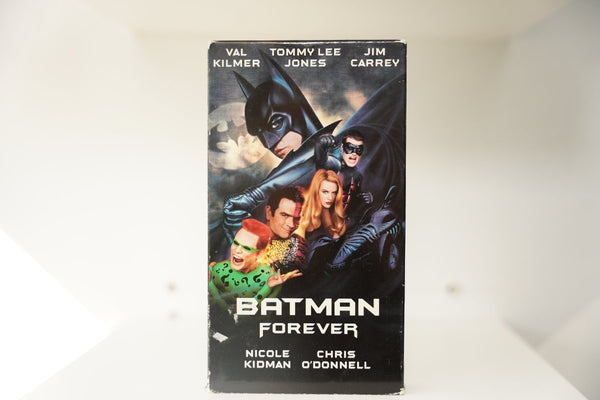
VHS big-box versus jewel-case format. A big-box cardboard VHS reads pre-1991 reliably. The shift to standard jewel-case clamshells across major studios happened in a tight window from about 1989 through 1991. A big-box format on a 1990 or 1991 release is normal; a big-box on a 1992 or later release is the rare exception.
Atari cartridge label era. A Picture Label Atari cartridge (the photo-illustration label format used 1980 to 1981) versus a Text Label cartridge (the simpler text-and-graphic label that ran through the back catalog) is the clearest dating tell on Atari inventory. The label era often matters more than the title for pricing.
Mitchell & Ness pre-1990 production date. A Mitchell & Ness throwback with a 1986 to 1989 production date and a serial-number tag is the rare tier of the brand's catalog. The brand's volume scaled up through the 1990s.
Salem Sportswear copyright year. Salem tags carried a printed copyright year. A 1988 or 1989 Salem copyright on a heavyweight sweatshirt or all-over-print piece is a reliable dating anchor.
Logo 7 construction signature. A heavily-embroidered or twill-applied team-logo construction on a Logo 7 tag reads late-1980s reliably; the brand's later production simplified the construction.
None of these signals is sufficient alone. Combined, they triangulate within a two-to-three-year window and we list with that level of confidence on the PDP.
What is currently on our floor from the decade
The 1980s pieces we have stocked recently sit across the 80s throwback collection, the vintage 80s t-shirts collection, the vintage 80s VHS collection, the vintage Nintendo games collection, the vintage NFL jerseys collection, the vintage NBA jerseys collection, the vintage WWF t-shirts collection, and the vintage wrestling VHS collection. Most of what we grade through the bench is single-piece, single-source, and dated by tag, label, and construction. We do not restock and we do not reissue. When a 1980s piece is gone, it is gone, and the next one we get may not arrive for months.
For collectors who want to go deeper on the dating and authentication, we keep four reference guides on the site: the wrestling jersey collector guide, the jersey authentication guide, the retro game identification guide, and the SNES cartridge label variants reference. The SNES reference is a 1990s document but the dating principles carry across to NES and Atari. The other three guides cover 1980s inventory directly.
The shop is at 707 East Fremont Street, Suite 1170, ground floor on the east side of Container Park. If you have a 1980s piece you want a second eye on, bring it in. We grade in person and we will tell you what we see, including when we cannot date a piece confidently. Email is info@keepitclassiclv.com.
End of entry · Next Friday: new drop · Every piece one of one